Click here for the new Anchor Rising & Ocean State Current page

Things We Read Today, 8, by Justin Katz
Political Thought
7:11 PM, 09/11/12
Rhode Islanders Killed Serving in Afghanistan and Iraq, by Carroll Andrew Morse
Heroes
12:00 PM, 05/28/12
Remember, by Carroll Andrew Morse
Heroes
9:00 AM, 05/28/12
We've Forgotten, by Patrick Laverty
Heroes
9:56 AM, 12/ 7/11
NYC Responders Not Invited, by Patrick Laverty
Heroes
10:46 PM, 09/10/11
Rhode Islanders Killed While Serving in Afghanistan and Iraq , by Carroll Andrew Morse
Heroes
12:30 PM, 05/30/11
Remember, by Carroll Andrew Morse
Heroes
12:00 PM, 05/30/11
Rhode Island Soldiers and Sailors Killed in Iraq and Afghanistan , by Carroll Andrew Morse
Heroes
1:00 PM, 05/31/10
Remembering, by Carroll Andrew Morse
Heroes
11:00 AM, 05/31/10
Remembering, by Monique Chartier
Heroes
8:00 AM, 05/31/10
September 11, 2012

Things We Read Today, 8
Today: September 11, global change, evolution, economics, 17th amendment, gold standard, and a boughten electorate... all to a purpose.
May 28, 2012
Rhode Islanders Killed Serving in Afghanistan and Iraq
Sgt. Gregory A. Belanger
Sgt. Charles T. Caldwell
Staff Sgt. Joseph Camara
Spc. Michael Andrade
CW5 Sharon T. Swartworth
Capt. Matthew J. August
Sgt. 1st Class Curtis Mancini
Master Sgt. Richard L. Ferguson
Lance Cpl. Matthew K. Serio
Lance Cpl. John J. Van Gyzen IV
Sgt. Christopher S. Potts
Lance Cpl. Holly A. Charette
2nd Lt. Matthew S. Coutu
Cpl. Brian R. St. Germain
Staff Sgt. Dale J. Kelly
Sgt. Moises Jazmin
Lance Cpl. Eric P. Valdepenas
Sgt. Michael R. Weidemann
Spc. Agent Nathan J. Schuldheiss
Sgt. Kyle J. Harrington
Lt. j.g. Francis L. Toner IV
Pfc. Kyle J. Coutu
Staff Sgt. Thomas H. Oakley
Sgt. Michael F. Paranzino
Spc. Dennis C. Poulin
Spc. Dennis P. Weichel Jr.
Lance Cpl. Abraham Tarwoe
December 7, 2011

We've Forgotten
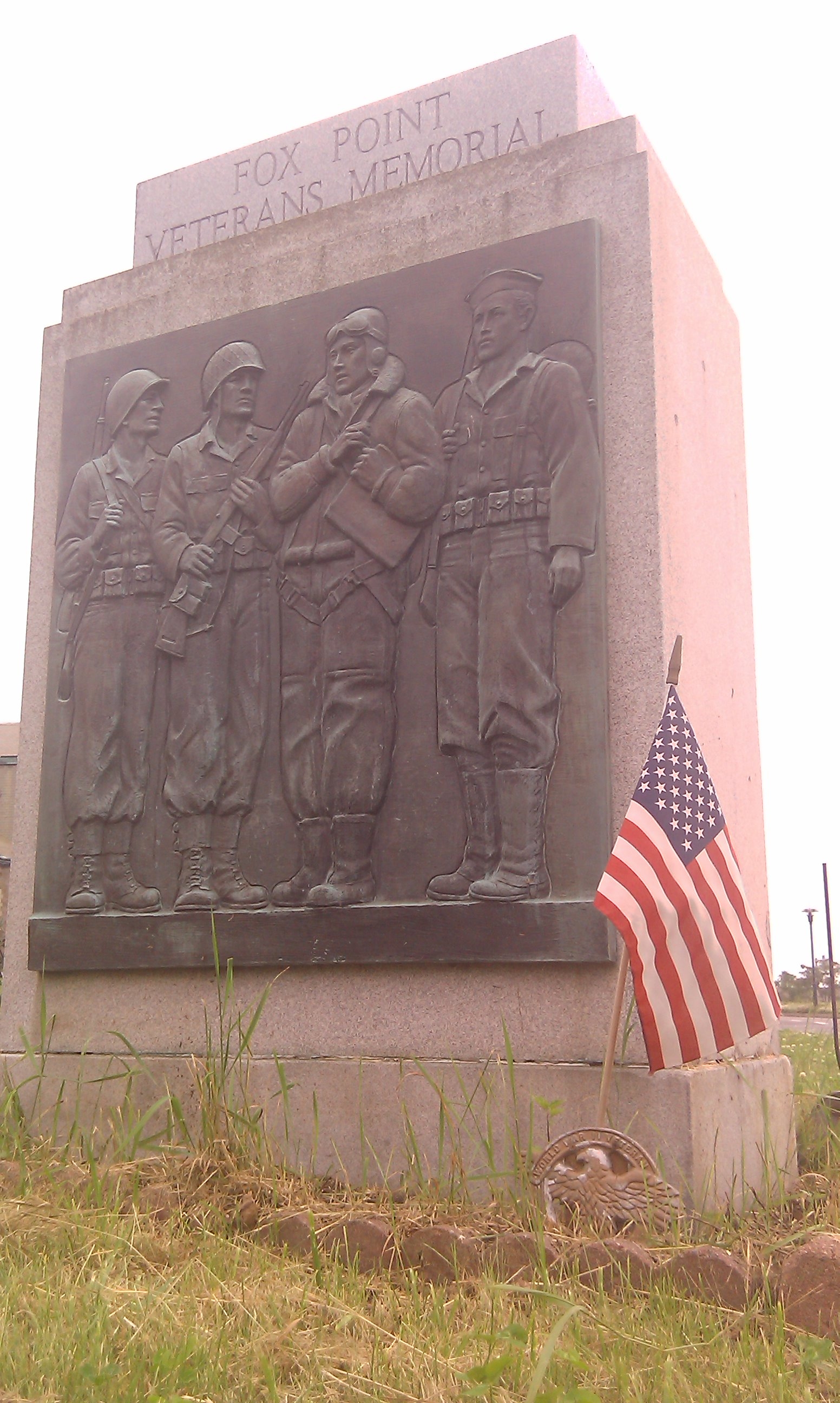
Today, we're still arguing over what to call a decorated evergreen tree and still driving around with our faded "Never Forget 9/11" bumper and rear window stickers. But the sad part is we have forgotten. No, not about September 11th, many of us do respectfully and somberly remember that every year. What we do forget is the day that President Franklin Roosevelt called "a date which will live in infamy." Today is Pearl Harbor Day.
We no longer hear much mention of Pearl Harbor Day or the attacks that happened 70 years ago today. The day that killed 2,390 Americans in Pearl Harbor, Hawaii. The day that finally drew the United States into World War II.
This morning, I did some Googling to see how many people are still living today who were there for the attacks. Ironically, the source that Google came back with at the top of the search results is a newspaper from the UK:
Mal Middlesworth, former president of the National Pearl Harbor Survivors' Association, estimates there are around 2,700 Pearl Harbor veterans still alive.
The survivors of the day are all in their late-80s to early-90s, so that makes it easy to forget these brave people. They're all great-grandparents, these old men who attend all the veterans ceremonies each year in their hats and other memorial garb. So that makes it easy to forget them?
We claim that we will "Never Forget" the victims of September 11, 2001, but the truth is, we will. Our society will be full of the same people we have today, people who were born decades after the event and then it's just something on the pages of a history textbook.
Shame on us.
September 10, 2011
NYC Responders Not Invited
Ten years ago, hundreds of first responders, firefighters, police officers, and port authority officials weren't invited to the World Trade Center towers. They weren't invited to run up dozens of flights of stairs with their gear, with firefighting equipment. They weren't invited to give up their lives on that day. But they went anyway. They all responded with one goal in mind, to save lives. So how does the city remember those people in a ceremony marking the 10th anniversary of the World Trade Center attacks? By not inviting them again. According to CNN.com
The first responders are not invited to this year's September 11 memorial ceremony at ground zero, New York City Mayor Michael Bloomberg's office confirmed Monday.Well, Bloomberg must have a really good reason for keeping these people out, right?
"given the space constraints, we're working to find ways to recognize and honor first responders, and other groups, at different places and times," [Bloomberg spokesman Andrew] Brent said.No space, huh? I'm sure those staircases they died in were plenty roomy too. I'm sure there was plenty of space under all that rubble they were trapped under and died in.
So we'll just honor them at a different place and time. Hey guys, how's the Tuesday before Halloween in Bryant Park work for you? The mayor might have a few minutes to spend and say thank you.
Everyone involved in this should be embarrassed. Shame on you.
May 30, 2011
Rhode Islanders Killed While Serving in Afghanistan and Iraq
Sgt. Gregory A. Belanger
Sgt. Charles T. Caldwell
Staff Sgt. Joseph Camara
Spc. Michael Andrade
CW5 Sharon T. Swartworth
Capt. Matthew J. August
Master Sgt. Richard L. Ferguson
Lance Cpl. Matthew K. Serio
Lance Cpl. John J. Van Gyzen IV
Sgt. Christopher S. Potts
Lance Cpl. Holly A. Charette
2nd Lt. Matthew S. Coutu
Cpl. Brian R. St. Germain
Staff Sgt. Dale J. Kelly
Sgt. Moises Jazmin
Lance Cpl. Eric P. Valdepenas
Sgt. Michael R. Weidemann
Spc. Agent Nathan J. Schuldheiss
Sgt. Kyle J. Harrington
Lt. j.g. Francis L. Toner IV
Pfc. Kyle J. Coutu
Staff Sgt. Thomas H. Oakley
Sgt. Michael F. Paranzino
Spc. Dennis C. Poulin
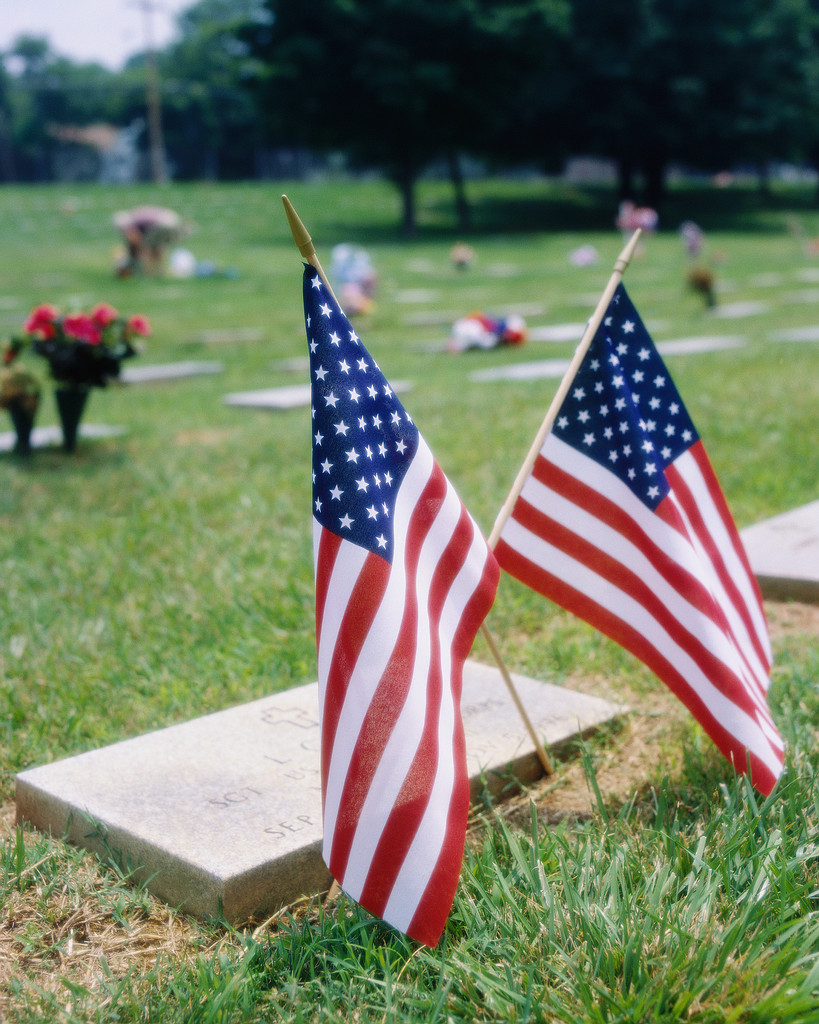
Remember
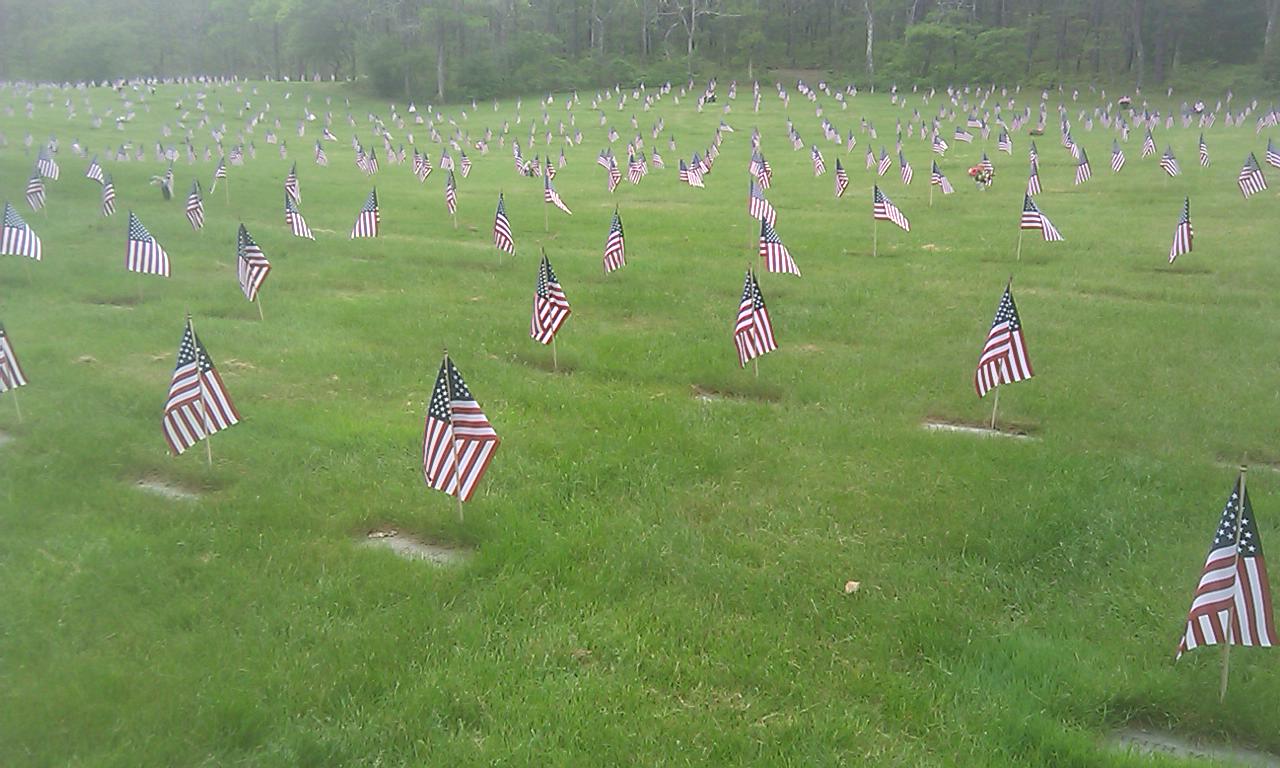
From the Massachusetts National Cemetery, Bourne, Massachusetts, May 29, 2011. Flags were placed through a volunteer effort organized by Paul Monti, father of Medal of Honor recipient Sgt. First Class Jared C. Monti, killed in 2006 while serving in the U.S. Army in Afghanistan.
May 31, 2010
Rhode Island Soldiers and Sailors Killed in Iraq and Afghanistan
Sgt. Gregory A. Belanger
Sgt. Charles T. Caldwell
Staff Sgt. Joseph Camara
Spec. Michael Andrade
CW5 Sharon T. Swartworth
Capt. Matthew J. August
Master Sgt. Richard L. Ferguson
Lance Cpl. Matthew K. Serio
Sgt. Christopher S. Potts
Lance Cpl. Holly A. Charette
2nd Lt. Matthew S. Coutu
Cpl. Brian R. St. Germain
Sgt. Moises Jazmin
Lance Cpl. Eric P. Valdepenas
Sgt. Michael R. Weidemann
Spc. Agent Nathan J. Schuldheiss
Sgt. Kyle J. Harrington
Lt. j.g. Francis L. Toner IV
Pfc. Kyle J. Coutu
Staff Sgt. Thomas H. Oakley
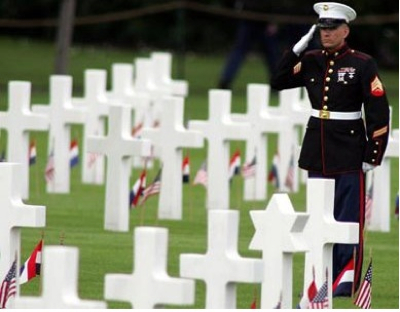
Remembering
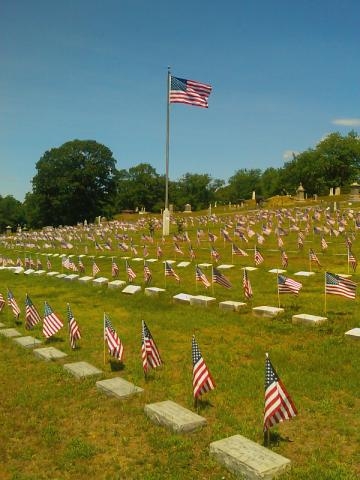
From the North Burial Ground, Branch Avenue, Providence, Rhode Island, May 2010.
October 30, 2009

The Hero from Elmhurst
Catching up on yesterday's ProJo this morning, I came across this jawdropper development to the terrible story of two men hit and one man impaled in a windshield.
[Albert] Garcia was approaching the Branch Avenue exit, on his way to pick up his brother at a Providence club Saturday night when he saw a two-car crash, “a football field away,” in the high-speed lane on Route 95 south.Garcia said he saw the Honda Civic “on the left, going about 75 mph.”
“He tried to brake a couple of times and tried to move to the middle lane,” said Garcia. Then Garcia saw the car, driven by Christopher J. Swiridowsky, hit two men standing outside crashed cars.
“One I saw on the middle of the road,” Garcia said. “The other, I never saw again.”
Motorists stopped to help the victims.
Swiridowsky appeared to stop briefly, Garcia said, but then sped off, taking the Branch Avenue exit.
Garcia said he thought of staying to help the victims, but decided instead to chase the car.
“It was late at night. It was dark, and it was a black car,” Garcia recalled, adding, “Nobody is going to get this guy’s plate. This guy’s going to get away.”
Driven by adrenaline, Garcia followed the car off the highway onto Branch Avenue.“I got a license plate, but I was so nervous that I couldn’t write it down, couldn’t find a pen” and couldn’t juggle the cell phone.
So, he stayed on Swiridowsky’s tail until the car pulled into the National Office Products parking lot on Mechanics Avenue a mile and a half away from the crash site. He positioned his car behind Swiridowsky’s, blocking it.
Reacting to the initial report of the accident, Providence EMT Michael Morse over at Rescuing Providence observed
I don’t know if it is a Providence thing, but over half of the MVA’s we respond to are hit and runs. It doesn’t matter the severity, some people are so self consumed they just don’t care if another human being lives or dies.
Were it not for the focus and bravery of one man, a depraved, reckless scumbag might not have been brought to account.
Bravo, Albert Garcia.
September 11, 2009
Remembrance
From Michael Morse of Rescuing Providence...
Of all the things about that day I will “Never Forget,” the hundreds of American Flags that magically appeared along my route remain the most vivid. On doorways, utility poles, storefronts, from car windows, everywhere I could see the red white and blue flew proudly.The best part of it all is nobody told us to do it, it hadn’t become fashionable yet, it just was. There were a lot of private ceremonies going on that day, I didn’t know it but I was never alone when I stood in my garage and planted the flag proudly on my home.
I will “Never Forget” those that perished that day, especially the firefighters, EMT’s and police officers that answered the call for help.
Remember What Wasn't Seen...
...eight years ago, to the minute, when Islamist terrorists lost the initiative in the war they started.
From 9:57, the cockpit recorder picks up the sounds of fighting in an aircraft losing control at 30,000 feet - the crash of trolleys, dishes being hurled and smashed. The terrorists scream at each other to hold the door against what is obviously a siege from the cabin. A passenger cries: 'Let's get them!' and there is more screaming, then an apparent breach. 'Give it to me!' shouts a passenger, apparently about to seize the controls.
May 25, 2009
Rhode Island Soldiers and Sailors Killed in Iraq and Afghanistan
Sgt. Gregory A. Belanger
Sgt. Charles T. Caldwell
Staff Sgt. Joseph Camara
Spec. Michael Andrade
CW5 Sharon T. Swartworth
Capt. Matthew J. August
Lance Cpl. Matthew K. Serio
Sgt. Christopher S. Potts
Lance Cpl. Holly A. Charette
2nd Lt. Matthew S. Coutu
Cpl. Brian R. St. Germain
Sgt. Moises Jazmin
Lance Cpl. Eric P. Valdepenas
Sgt. Michael R. Weidemann
Spc. Agent Nathan J. Schuldheiss
Sgt. Kyle J. Harrington
Lt. j.g. Francis L. Toner IV
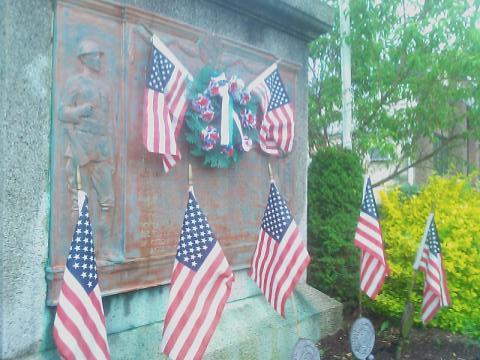

Remember
I've spent the last week training members of the U.S. Navy down in Norfolk, VA. Their dedication and can-do attitude is a refreshing reminder of the best that this country has to offer: her young men and women. Thus has it always been and will, thank God, continue to be. So take some time this weekend to thank those who serve our country and to remember those who gave the ultimate sacrifice. May God bless them and their families.
May 5, 2009

Margaret Thatcher: Reflecting on the Iron Lady 30 Years Later
We don't have a lot of people in today's public life who deserve the word "hero" attached to them. Things were so different some 20-30 years ago when we had three who were shining beacons for liberty in our world: Ronald Reagan, Margaret Thatcher, and Pope John Paul II.
Yesterday was the 30-year anniversary of Margaret Thatcher taking office. Power Line has a tribute to her and links to these articles:
Boris Johnson: Blonde on Blonde
John O'Sullivan: The Lady Turned Around Britian's Fortunes
Kenneth Minogue's review of Claire Berlinski's book There Is No Alternative: Why Margaret Thatcher Matters
Thatcher's own books include:
The Downing Street Years
The Collected Speeches of Margaret Thatcher
Statecraft: Strategies for a Changing World
The Iron Lady was quite a leader. And, in these uncertain times, she would probably be telling us not to go wobbly.
January 8, 2009
Child's Best Friend
The following story makes me think that it mightn't be a bad idea finally to fill the gap left by our previous dog:
An animal that wildlife experts believe to be a coyote attacked a 7-year-old girl on Prudence Island on Dec. 30, grabbing her by the arm and dragging her toward the woods.But the girl's white American Labrador, named Kelly, fought the attacker off and saved her from injury.
According to what a Department of Environmental Management representative from the Fish and Wildlife division told Portsmouth police, this would be the first recorded coyote attack on a person in Rhode Island. ...
Lauren told her mother that she had heard rustling in the woods and had thought it was their neighbor and his beagle. When Lauren got closer to investigate, she said she saw what she thought was a dog that was taller than her Labrador and was a black/brown color. The description that Lauren gave of the animal matched a coyote sighting by her neighbor a short while earlier. No dogs living nearby fit the description.
When Ms. Allard spoke to a Department of Environmental Management wildlife biologist he concluded that it must have been a coyote.
"When it spotted her, it charged her," Ms. Allard said, repeating how Lauren described the attack.
Wearing only a long-sleeved shirt and a vest, Lauren was bitten on the arm. Lauren said that the coyote pulled her by the arm toward the woods. As Lauren tried to tug away from the animal's grip, Kelly jumped in and bit the attacker's rear leg.
September 11, 2008
September 11 Remembrances
Tom Kenney, posting at RI Future…
And in the midst of vast despair and destructionMichael Morse from last year…Beyond comprehension in its scope
It was a picture of three firefighters raising a flag
That gave America hope.
I learned an important lesson that day and the weeks and months to follow. The people we are sworn to protect are worth protecting. We stood together as a nation like nobody could have dreamed possible. We remembered what it meant to be Americans; we stood together, cried together and together have moved forward. Racial and economic divisions didn’t matter, differing political philosophies were irrelevant.This notice made at 9:57 am -- seven years to the minute when Islamist terrorists lost the initiative in the war they started.In a many ways we’ve returned to our pre-911 mindset, and that is unfortunate, but the togetherness and resolve that existed then still resides in all of us, and comes to the surface when necessary. I know it’s there, I remember, and that is what keeps me going.
July 12, 2008
RIP, Tony Snow
Tony Snow died today, at age 53, of cancer. We remember his family in our prayers as we pay tribute to the memory of a wonderful man.
Some tributes:
Cal Thomas
Byron York
Shannen Coffin
Kathryn Jean Lopez
Michelle Malkin
Fox News
Several selections from Snow's writings about Reagan, Parting Thoughts on the Ultimate Sacrifice, and Message to GOPers.
Finally, Snow wrote a poignant and powerful article last year entitled Cancer's Unexpected Blessings: When you enter the Valley of the Shadow of Death, things change where he discussed his cancer:
Blessings arrive in unexpected packages—in my case, cancer.Those of us with potentially fatal diseases—and there are millions in America today—find ourselves in the odd position of coping with our mortality while trying to fathom God's will. Although it would be the height of presumption to declare with confidence What It All Means, Scripture provides powerful hints and consolations.
The first is that we shouldn't spend too much time trying to answer the why questions: Why me? Why must people suffer? Why can't someone else get sick? We can't answer such things, and the questions themselves often are designed more to express our anguish than to solicit an answer.
I don't know why I have cancer, and I don't much care. It is what it is—a plain and indisputable fact. Yet even while staring into a mirror darkly, great and stunning truths begin to take shape. Our maladies define a central feature of our existence: We are fallen. We are imperfect. Our bodies give out.
But despite this—because of it—God offers the possibility of salvation and grace. We don't know how the narrative of our lives will end, but we get to choose how to use the interval between now and the moment we meet our Creator face-to-face.
Second, we need to get past the anxiety. The mere thought of dying can send adrenaline flooding through your system. A dizzy, unfocused panic seizes you. Your heart thumps; your head swims. You think of nothingness and swoon. You fear partings; you worry about the impact on family and friends. You fidget and get nowhere.
To regain footing, remember that we were born not into death, but into life—and that the journey continues after we have finished our days on this earth. We accept this on faith, but that faith is nourished by a conviction that stirs even within many nonbelieving hearts—an intuition that the gift of life, once given, cannot be taken away. Those who have been stricken enjoy the special privilege of being able to fight with their might, main, and faith to live—fully, richly, exuberantly—no matter how their days may be numbered.
Third, we can open our eyes and hearts. God relishes surprise. We want lives of simple, predictable ease—smooth, even trails as far as the eye can see—but God likes to go off-road. He provokes us with twists and turns. He places us in predicaments that seem to defy our endurance and comprehension—and yet don't. By his love and grace, we persevere. The challenges that make our hearts leap and stomachs churn invariably strengthen our faith and grant measures of wisdom and joy we would not experience otherwise.
'You Have Been Called'
Picture yourself in a hospital bed. The fog of anesthesia has begun to wear away. A doctor stands at your feet; a loved one holds your hand at the side. "It's cancer," the healer announces.
The natural reaction is to turn to God and ask him to serve as a cosmic Santa. "Dear God, make it all go away. Make everything simpler." But another voice whispers: "You have been called." Your quandary has drawn you closer to God, closer to those you love, closer to the issues that matter—and has dragged into insignificance the banal concerns that occupy our "normal time."...
The moment you enter the Valley of the Shadow of Death, things change. You discover that Christianity is not something doughy, passive, pious, and soft. Faith may be the substance of things hoped for, the evidence of things not seen. But it also draws you into a world shorn of fearful caution. The life of belief teems with thrills, boldness, danger, shocks, reversals, triumphs, and epiphanies. Think of Paul, traipsing though the known world and contemplating trips to what must have seemed the antipodes (Spain), shaking the dust from his sandals, worrying not about the morrow, but only about the moment.
There's nothing wilder than a life of humble virtue—for it is through selflessness and service that God wrings from our bodies and spirits the most we ever could give, the most we ever could offer, and the most we ever could do.
Finally, we can let love change everything. When Jesus was faced with the prospect of crucifixion, he grieved not for himself, but for us. He cried for Jerusalem before entering the holy city. From the Cross, he took on the cumulative burden of human sin and weakness, and begged for forgiveness on our behalf.
We get repeated chances to learn that life is not about us—that we acquire purpose and satisfaction by sharing in God's love for others. Sickness gets us partway there. It reminds us of our limitations and dependence. But it also gives us a chance to serve the healthy. A minister friend of mine observes that people suffering grave afflictions often acquire the faith of two people, while loved ones accept the burden of two people's worries and fears.
Learning How to Live
Most of us have watched friends as they drifted toward God's arms not with resignation, but with peace and hope. In so doing, they have taught us not how to die, but how to live. They have emulated Christ by transmitting the power and authority of love...
[Snow's best friend, dying of cancer several years ago] gift was to remind everyone around him that even though God doesn't promise us tomorrow, he does promise us eternity—filled with life and love we cannot comprehend—and that one can in the throes of sickness point the rest of us toward timeless truths that will help us weather future storms.
Through such trials, God bids us to choose: Do we believe, or do we not? Will we be bold enough to love, daring enough to serve, humble enough to submit, and strong enough to acknowledge our limitations? Can we surrender our concern in things that don't matter so that we might devote our remaining days to things that do?
When our faith flags, he throws reminders in our way. Think of the prayer warriors in our midst. They change things, and those of us who have been on the receiving end of their petitions and intercessions know it.
It is hard to describe, but there are times when suddenly the hairs on the back of your neck stand up, and you feel a surge of the Spirit. Somehow you just know: Others have chosen, when talking to the Author of all creation, to lift us up—to speak of us!
This is love of a very special order. But so is the ability to sit back and appreciate the wonder of every created thing. The mere thought of death somehow makes every blessing vivid, every happiness more luminous and intense. We may not know how our contest with sickness will end, but we have felt the ineluctable touch of God.
What is man that Thou art mindful of him? We don't know much, but we know this: No matter where we are, no matter what we do, no matter how bleak or frightening our prospects, each and every one of us, each and every day, lies in the same safe and impregnable place—in the hollow of God's hand.
RIP, Tony Snow.
ADDENDUM:
Snow's 2007 commencement address at Catholic University
Bill Kristol
...I’ll remember Tony Snow more for his character than his career. I’ll especially remember the calm courage and cheerful optimism he displayed in his last three years, in the face of his fatal illness.For quite a while now, optimism has had a bad reputation in intellectual circles. The fashionable books of my youth — and they are good books — were darkly foreboding ones like Aldous Huxley’s "Brave New World" and George Orwell’s "1984." Young conservatives of the era were much taken by Whittaker Chambers’s gloomy memoir, "Witness." We who read Albert Camus — and if you had any pretensions to being a non-Marxist intellectual, you read Camus — loved the melancholy close of his essay "The Myth of Sisyphus": "One must imagine Sisyphus happy."
The basic attitude one derived from these works was that pessimism is deeper than optimism, and existential angst more profound than cheerful confidence. This attitude remains powerful, perhaps dominant, among many thoughtful people today — perhaps especially among conservatives, reacting against a facile liberal belief in progress.
Tony Snow was a conservative. But he didn’t have a prejudice in favor of melancholy. His deep Christian faith combined with his natural exuberance to give him an upbeat world view. Watching him, and so admiring his remarkable strength of character in the last phase of his life, I came to wonder: Could it be that a stance of faith-grounded optimism is in fact superior to one of worldly pessimism or sophisticated fatalism?
Tony was one of the nicest guys you’d ever meet — kind, helpful and cheerful. But underlying these seemingly natural qualities was a kind of choice: the choice of gratitude. Tony thought we should be grateful for what life has given us, not bitter or anxious about what it hasn’t.
So he once wrote that "If you think Independence Day is America’s defining holiday, think again. Thanksgiving deserves that title, hands-down." He believed that gratitude, not self-assertion, was the fundamental human truth, and that a recognition of this was one of the things that made America great...
...Tony was a fascinating type. He was, literally, the opposite of a paranoid. He was a “pro-noid.” He assumed people liked him. It is a rare quality for any person. It is almost unheard-of in Washington. Tony lived a wonderful life in large measure because he believed the universe was on his side, and it was. Until it wasn’t...
...From the start I could see that Tony was blessed not just with brains and great looks — he had a far rarer virtue: God gave him the most superior temperament I've ever seen in a man of his prominence. Unfailingly gracious, sweet, and genuine, he was always a pleasure to be around. We kept in touch over the years and when he was hit by cancer, the entire world saw that what had at first seemed like just niceness was something far more, something approaching greatness. Constantly dismissive of his woes and worries, steadfast in his faith in a loving God, he bore his affliction with a most surpassing grace...
...He had a uniquely jovial demeanor; he got along with people of all political persuasions; he treated everyone with respect; he was deeply knowledgeable in all matters with which he would deal and a quick study as to the limited others; he was a fierce advocate for positions he believed in -- and most of those aligned nicely with this administration's; and his verbal agility was unparalleled. Even in fierce debate, he was always of good cheer.But in my opinion, Tony's greatest attributes were his genuineness and authenticity, his impeccable character, his abundant decency as a human being, his likability, his work ethic and, most of all, his profoundly held life priorities, beginning with his paramount and unshakable commitments to God and family.
Many have already spoken of Tony's consuming love for his wife and children and his passion for God. I am but another firsthand witness to his "walking the walk" and, like so many others, greatly admired him for it.
People tend to say very nice things about people who pass away -- and that is as it should be; it's the right thing to do. But be assured in Tony's case, all the eulogies you are hearing about and reading are heartfelt and utterly without reservation. Tony was the real article -- he and the life he led were examples to which we should all aspire...
...He was an amazing man who gave the impression he had all the time in the world for everyone he met. Which, of course, was the one thing he didn't have...
...the quality that most struck me then about Tony, whom I hadn’t met before, was not his energy and enthusiasm (which were wonderful—"a breath of fresh air" is quite right) but his deep and intensely cheerful curiosity.In his first week in the job [as White House press secretary], I made the mistake of sending Tony a half page of “talking points” about an issue I was charged with that was likely to come up that day. This was how his predecessor had preferred to get information from the policy staff. I quickly got a call from Snow saying that was all very nice, but why don’t we talk in some detail instead about what had happened, the background, the people involved, the history, the parts reporters may not know about that ought to shape our response...it was also one of the most peculiar telephone conversations I’ve ever had. We didn’t know each other when he called, and by the end of that fifteen or twenty minute conversation, he not only knew all about the issue in question, he knew all about me, my family, and my life, and I knew more about him than I do about some people I’ve known for years. Needless to say, in that afternoon’s briefing, when the subject did come up, Tony batted the question out of the park, putting things much better than I had on the phone.
...it became clear that he wanted to learn everything he could not only so that he could speak with some depth and authority to the press...but also because he himself was moved by a love of the little details and the big stories. This was an important part of his infectious enthusiasm. His love of life and his amazement at our country had to do with an appreciation for how the little pieces added up, and what extraordinary things happen here every day. His deep reserve of principle, love, and faith was never far from the surface, and he drew on it easily and often, even as the surface was always bubbling with excitement, confidence, and optimism...
Bob Beckel and Cal Thomas on Bill O'Reilly
Mark Hemingway
Kathryn Jean Lopez here and here on Snow's interview with David Gregory, which is here; Lopez concludes with these words:
Live life until you can no longer. "Every moment's a blessing." Tony's moments with us are up, but don't let that be the takeaway from his life, that he died; we all die. Focus on how we can live — as you can see, it can make people take notice, and that's a good thing when it's for the right reasons.
May 26, 2008
Rhode Island Soldiers Killed Serving In Operation Iraqi Freedom
Sgt. Gregory A. Belanger
Sgt. Charles T. Caldwell
Spec. Michael Andrade
Capt. Matthew J. August
Lance Cpl. Matthew K. Serio
Sgt. Christopher S. Potts
Lance Cpl. Holly A. Charette
2nd Lt. Matthew S. Coutu
Cpl. Brian R. St. Germain
Sgt. Moises Jazmin
Lance Cpl. Eric P. Valdepenas
Sgt. Michael R. Weidemann
Special Agent Nathan J. Schuldheiss
January 9, 2008
Major Andrew Olmsted, 1969 - 2008
United States Army Major Andrew Olmsted was killed in northern Iraq on January 3. We knew each other in high school, when we were both members of the Model United Nations club! I've discovered, too late, that he was an active milblogger.
Major Olmsted wrote a final blog post, to be published in the event of his death in Iraq...
I am leaving this message for you because it appears I must leave sooner than I intended. I would have preferred to say this in person, but since I cannot, let me say it here.
-- G'Kar, Babylon 5Only the dead have seen the end of war.
-- Plato
This is an entry I would have preferred not to have published, but there are limits to what we can control in life, and apparently I have passed one of those limits. And so, like G'Kar, I must say here what I would much prefer to say in person. I want to thank hilzoy for putting it up for me. It's not easy asking anyone to do something for you in the event of your death, and it is a testament to her quality that she didn't hesitate to accept the charge. As with many bloggers, I have a disgustingly large ego, and so I just couldn't bear the thought of not being able to have the last word if the need arose. Perhaps I take that further than most, I don't know. I hope so. It's frightening to think there are many people as neurotic as I am in the world. In any case, since I won't get another chance to say what I think, I wanted to take advantage of this opportunity. Such as it is.
When some people die, it's time to be sad. But when other people die, like really evil people, or the Irish, it's time to celebrate.
-- Jimmy Bender, "Greg the Bunny"And maybe now it's your turn
To die kicking some ass.
-- Freedom Isn't Free, Team America
What I don't want this to be is a chance for me, or anyone else, to be maudlin. I'm dead. That sucks, at least for me and my family and friends. But all the tears in the world aren't going to bring me back, so I would prefer that people remember the good things about me rather than mourning my loss. (If it turns out a specific number of tears will, in fact, bring me back to life, then by all means, break out the onions.) I had a pretty good life, as I noted above. Sure, all things being equal I would have preferred to have more time, but I have no business complaining with all the good fortune I've enjoyed in my life. So if you're up for that, put on a little 80s music (preferably vintage 1980-1984), grab a Coke and have a drink with me. If you have it, throw 'Freedom Isn't Free' from the Team America soundtrack in; if you can't laugh at that song, I think you need to lighten up a little. I'm dead, but if you're reading this, you're not, so take a moment to enjoy that happy fact.
Our thoughts form the universe. They always matter.
-- Citizen G'Kar, Babylon 5
Believe it or not, one of the things I will miss most is not being able to blog any longer. The ability to put my thoughts on (virtual) paper and put them where people can read and respond to them has been marvelous, even if most people who have read my writings haven't agreed with them. If there is any hope for the long term success of democracy, it will be if people agree to listen to and try to understand their political opponents rather than simply seeking to crush them. While the blogosphere has its share of partisans, there are some awfully smart people making excellent arguments out there as well, and I know I have learned quite a bit since I began blogging. I flatter myself I may have made a good argument or two as well; if I didn't, please don't tell me. It has been a great five-plus years. I got to meet a lot of people who are way smarter than me, including such luminaries as Virginia Postrel and her husband Stephen (speaking strictly from a 'improving the species' perspective, it's tragic those two don't have kids, because they're both scary smart.), the estimable hilzoy and Sebastian of Obsidian Wings, Jeff Goldstein and Stephen Green, the men who consistently frustrated me with their mix of wit and wisdom I could never match, and I've no doubt left out a number of people to whom I apologize. Bottom line: if I got the chance to meet you through blogging, I enjoyed it. I'm only sorry I couldn't meet more of you. In particular I'd like to thank Jim Henley, who while we've never met has been a true comrade, whose words have taught me and whose support has been of great personal value to me. I would very much have enjoyed meeting Jim.
Blogging put me in touch with an inordinate number of smart people, an exhilarating if humbling experience. When I was young, I was smart, but the older I got, the more I realized just how dumb I was in comparison to truly smart people. But, to my credit, I think, I was at least smart enough to pay attention to the people with real brains and even occasionally learn something from them. It has been joy and a pleasure having the opportunity to do this.
It's not fair.
No. It's not. Death never is.
-- Captain John Sheridan and Dr. Stephen Franklin, Babylon 5They didn't even dig him a decent grave.
Well, it's not how you're buried. It's how you're remembered.
-- Cimarron and Wil Andersen, The Cowboys
I suppose I should speak to the circumstances of my death. It would be nice to believe that I died leading men in battle, preferably saving their lives at the cost of my own. More likely I was caught by a marksman or an IED. But if there is an afterlife, I'm telling anyone who asks that I went down surrounded by hundreds of insurgents defending a village composed solely of innocent women and children. It'll be our little secret, ok?
I do ask (not that I'm in a position to enforce this) that no one try to use my death to further their political purposes. I went to Iraq and did what I did for my reasons, not yours. My life isn't a chit to be used to bludgeon people to silence on either side. If you think the U.S. should stay in Iraq, don't drag me into it by claiming that somehow my death demands us staying in Iraq. If you think the U.S. ought to get out tomorrow, don't cite my name as an example of someone's life who was wasted by our mission in Iraq. I have my own opinions about what we should do about Iraq, but since I'm not around to expound on them I'd prefer others not try and use me as some kind of moral capital to support a position I probably didn't support. Further, this is tough enough on my family without their having to see my picture being used in some rally or my name being cited for some political purpose. You can fight political battles without hurting my family, and I'd prefer that you did so.
On a similar note, while you're free to think whatever you like about my life and death, if you think I wasted my life, I'll tell you you're wrong. We're all going to die of something. I died doing a job I loved. When your time comes, I hope you are as fortunate as I was.
What an idiot! What a loser!
-- Chaz Reingold, Wedding CrashersOh and I don't want to die for you, but if dying's asked of me;
I'll bear that cross with honor, 'cause freedom don't come free.
-- American Soldier, Toby Keith
Those who know me through my writings on the Internet over the past five-plus years probably have wondered at times about my chosen profession. While I am not a Libertarian, I certainly hold strongly individualistic beliefs. Yet I have spent my life in a profession that is not generally known for rugged individualism. Worse, I volunteered to return to active duty knowing that the choice would almost certainly lead me to Iraq. The simple explanation might be that I was simply stupid, and certainly I make no bones about having done some dumb things in my life, but I don't think this can be chalked up to stupidity. Maybe I was inconsistent in my beliefs; there are few people who adhere religiously to the doctrines of their chosen philosophy, whatever that may be. But I don't think that was the case in this instance either.
As passionate as I am about personal freedom, I don't buy the claims of anarchists that humanity would be just fine without any government at all. There are too many people in the world who believe that they know best how people should live their lives, and many of them are more than willing to use force to impose those beliefs on others. A world without government simply wouldn't last very long; as soon as it was established, strongmen would immediately spring up to establish their fiefdoms. So there is a need for government to protect the people's rights. And one of the fundamental tools to do that is an army that can prevent outside agencies from imposing their rules on a society. A lot of people will protest that argument by noting that the people we are fighting in Iraq are unlikely to threaten the rights of the average American. That's certainly true; while our enemies would certainly like to wreak great levels of havoc on our society, the fact is they're not likely to succeed. But that doesn't mean there isn't still a need for an army (setting aside debates regarding whether ours is the right size at the moment). Americans are fortunate that we don't have to worry too much about people coming to try and overthrow us, but part of the reason we don't have to worry about that is because we have an army that is stopping anyone who would try.
Soldiers cannot have the option of opting out of missions because they don't agree with them: that violates the social contract. The duly-elected American government decided to go to war in Iraq. (Even if you maintain President Bush was not properly elected, Congress voted for war as well.) As a soldier, I have a duty to obey the orders of the President of the United States as long as they are Constitutional. I can no more opt out of missions I disagree with than I can ignore laws I think are improper. I do not consider it a violation of my individual rights to have gone to Iraq on orders because I raised my right hand and volunteered to join the army. Whether or not this mission was a good one, my participation in it was an affirmation of something I consider quite necessary to society. So if nothing else, I gave my life for a pretty important principle; I can (if you'll pardon the pun) live with that.
It's all so brief, isn't it? A typical human lifespan is almost a hundred years. But it's barely a second compared to what's out there. It wouldn't be so bad if life didn't take so long to figure out. Seems you just start to get it right, and then...it's over.
-- Dr. Stephen Franklin, Babylon 5
I wish I could say I'd at least started to get it right. Although, in my defense, I think I batted a solid .250 or so. Not a superstar, but at least able to play in the big leagues. I'm afraid I can't really offer any deep secrets or wisdom. I lived my life better than some, worse than others, and I like to think that the world was a little better off for my having been here. Not very much, but then, few of us are destined to make more than a tiny dent in history's Green Monster. I would be lying if I didn't admit I would have liked to have done more, but it's a bit too late for that now, eh? The bottom line, for me, is that I think I can look back at my life and at least see a few areas where I may have made a tiny difference, and massive ego aside, that's probably not too bad.
The flame also reminds us that life is precious. As each flame is unique; when it goes out, it's gone forever. There will never be another quite like it.
-- Ambassador Delenn, Babylon 5
I write this in part, admittedly, because I would like to think that there's at least a little something out there to remember me by. Granted, this site will eventually vanish, being ephemeral in a very real sense of the word, but at least for a time it can serve as a tiny record of my contributions to the world. But on a larger scale, for those who knew me well enough to be saddened by my death, especially for those who haven't known anyone else lost to this war, perhaps my death can serve as a small reminder of the costs of war. Regardless of the merits of this war, or of any war, I think that many of us in America have forgotten that war means death and suffering in wholesale lots. A decision that for most of us in America was academic, whether or not to go to war in Iraq, had very real consequences for hundreds of thousands of people. Yet I was as guilty as anyone of minimizing those very real consequences in lieu of a cold discussion of theoretical merits of war and peace. Now I'm facing some very real consequences of that decision; who says life doesn't have a sense of humor?
But for those who knew me and feel this pain, I think it's a good thing to realize that this pain has been felt by thousands and thousands (probably millions, actually) of other people all over the world. That is part of the cost of war, any war, no matter how justified. If everyone who feels this pain keeps that in mind the next time we have to decide whether or not war is a good idea, perhaps it will help us to make a more informed decision. Because it is pretty clear that the average American would not have supported the Iraq War had they known the costs going in. I am far too cynical to believe that any future debate over war will be any less vitriolic or emotional, but perhaps a few more people will realize just what those costs can be the next time.
This may be a contradiction of my above call to keep politics out of my death, but I hope not. Sometimes going to war is the right idea. I think we've drawn that line too far in the direction of war rather than peace, but I'm a soldier and I know that sometimes you have to fight if you're to hold onto what you hold dear. But in making that decision, I believe we understate the costs of war; when we make the decision to fight, we make the decision to kill, and that means lives and families destroyed. Mine now falls into that category; the next time the question of war or peace comes up, if you knew me at least you can understand a bit more just what it is you're deciding to do, and whether or not those costs are worth it.
This is true love. You think this happens every day?
-- Westley, The Princess BrideGood night, my love, the brightest star in my sky.
-- John Sheridan, Babylon 5
This is the hardest part. While I certainly have no desire to die, at this point I no longer have any worries. That is not true of the woman who made my life something to enjoy rather than something merely to survive. She put up with all of my faults, and they are myriad, she endured separations again and again...I cannot imagine being more fortunate in love than I have been with Amanda. Now she has to go on without me, and while a cynic might observe she's better off, I know that this is a terrible burden I have placed on her, and I would give almost anything if she would not have to bear it. It seems that is not an option. I cannot imagine anything more painful than that, and if there is an afterlife, this is a pain I'll bear forever.
I wasn't the greatest husband. I could have done so much more, a realization that, as it so often does, comes too late to matter. But I cherished every day I was married to Amanda. When everything else in my life seemed dark, she was always there to light the darkness. It is difficult to imagine my life being worth living without her having been in it. I hope and pray that she goes on without me and enjoys her life as much as she deserves. I can think of no one more deserving of happiness than her.
I will see you again, in the place where no shadows fall.
-- Ambassador Delenn, Babylon 5
I don't know if there is an afterlife; I tend to doubt it, to be perfectly honest. But if there is any way possible, Amanda, then I will live up to Delenn's words, somehow, some way. I love you.

 About Community Crier

 About Engaged Citizen