July 3, 2009

NEA Boos Obama's Ed. Secretary

Marc Comtois

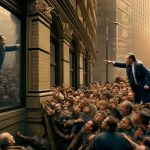
Education Secretary Arne Duncan was in Los Angeles to speak to an NEA convention.

Teachers booed and hissed today as Education Secretary Arne Duncan urged the nation's largest teachers union to change its view of merit-based pay and incorporate student achievement into teacher evaluation and compensation.
Ah, so professional. I've been to many engineering conventions where a speaker is booed and hissed for suggesting stricter accreditation standards or the like. NOT. Here's some of what Duncan said that them so upset. First, he addressed teacher accountability and assessment:
Our challenge is to make sure every child in America is learning from an effective teacher, no matter what it takes....So today, I ask you to join President Obama and me in a new commitment to results that recognizes and rewards success in the classroom and is rooted in our common obligation to children....I understand that tests are far from perfect and that it is unfair to reduce the complex, nuanced work of teaching to a simple multiple choice exam....Test scores alone should never drive evaluation, compensation or tenure decisions. That would never make sense. But to remove student achievement entirely from evaluation is illogical and indefensible.
Then he addressed the way that bonuses are earned by teachers (advanced degree and longevity bonuses, for instance), which may not be the most effective at rewarding good teachers:
School systems pay teachers billions of dollars more each year for earning credentials that do very little to improve the quality of teaching....At the same time, many schools give nothing at all to the teachers who go the extra mile and make all the difference in students' lives. Excellence matters, and we should honor it -- fairly, transparently and on terms teachers can embrace.
Duncan also explained why the model of public education is outdated and outmoded:
I believe that teacher unions are at a crossroads...These policies were created over the past century to protect the rights of teachers, but they have produced an industrial, factory model of education that treats all teachers like interchangeable widgets.

When inflexible seniority and rigid tenure rules that we designed put adults ahead of children, then we are not only putting kids at risk, we're putting the entire education system at risk....We're inviting the attack of parents and the public, and that is not good for any of us.

No it's not. The NEA has proven time and again that they aren't going to go along willingly with this kind of "change". Unfortunately, Duncan's explanation about outmoded factory models will fall on the deaf ears of those who think that mid-20th century factory models are the ideal to which we should all strive, in perpetuity, regardless of their practicality in the modern age.


Who Has More Control Over Centralized Government?

Justin Katz

Quite revealing, the underlying premise of regular Providence Journal contributor Tom Sgouros's latest. He describes new education standards recently promulgated by the state Board of Regents that appear to give local school committees and districts more freedom in designing their curricula. What's the problem with that?

The upshot is that school districts will be freed from the fiscal shackles that bind them and can manage their programs to increase their productivity. Sounds good? Even better, how about we say they can empower high-quality local school leadership to manage a streamlined 21st Century cutting-edge high-quality education program. What this means, of course, is there will be nobody to insist that elementary music classes aren't just an hour of listening to the radio once a week with the regular teacher. If some school committee wants to call that a "high quality music program," then there's now officially no one to say otherwise.

So wave a fond farewell to your school librarians, the music and art teachers, the drama teachers and all the extras that make kids want to go to school. After the June 4 meeting, they won't be required, so how long do you think your town will keep them?

What an astonishing view of government accountability! It would appear that an appointed (not elected) state board must be petitioned to change the rules because local school committees are all but unreachable... at least, Sgouros doesn't mention the possibility of petitioning local government representatives to maintain programs that are important to residents.

The reason for this view is indicated by the three paragraphs that Sgouros spends complaining about property tax caps. If a town is constrained (one would prefer them to be restrained) in the amount of money that it can demand from residents, and if those residents insist that important programs such as music and library remain, there's only one place to go, no? And applying pressure to the deals that unions have cajoled and bullied out of school districts is unthinkable to Sgouros's crowd.

That doesn't mean, of course, that Tom and some among his peers don't sincerely believe in the value of the programs that instruction costs are squeezing out. They know better than anybody that unions leverage state and national levels of power to implement ever-expanding contracts, so it makes sense, if they wish to protect programs, to install safeguards at that level. They've also learned that more powerful, higher, tiers of government may more easily be reached by powerful parties than by lowly taxpayers, whereas national lobbying influence and millions of dollars for expense on campaigns are not quite as indomitable in communities run by neighbors for neighbors.

I, too, believe that school children ought to have a wide range of opportunities for educational experience. Indeed, their loss is indicative of the American education establishment's race to the bottom — focusing its resources on those who are more difficult to educate and thereby lowering the environment to a utilitarian plane for all. If America is to remain competitive with nations of differing economic, cultural, and demographic character, creativity and a capacity for innovation will be critical.

I also believe, however, that mandating creativity from the top down not only is oxymoronic, but tends toward corruption. I'd therefore join Sgouros in encouraging Rhode Islanders to show that they "care what kinds of services are delivered by our towns." The most effective way of doing so is to approach that local committee whose members one sees walking their dogs and picking up prescriptions at the local drug store on a daily basis.


A Bipartisan Thorn

Justin Katz

It's encouraging to see that figures most often noted for their irascibility against right-leaning politicians can find fault with the other side:

Following a testy exchange during today's briefing with White House Press Secretary Robert Gibbs, veteran White House correspondent Helen Thomas told CNSNews.com that not even Richard Nixon tried to control the press the way President Obama is trying to control the press.

"Nixon didn't try to do that," Thomas said. "They couldn't control (the media). They didn't try. ...

"I'm not saying there has never been managed news before, but this is carried to fare-thee-well—for the town halls, for the press conferences," she said. "It's blatant. They don't give a damn if you know it or not. They ought to be hanging their heads in shame."

Two questions to which I won't presume to supply answers: Is this an indication of Thomas's objectivity or President Obama's extremity? If the latter, is it possible that the standard storyline about the partisan nature of oppressive behavior can be made to change?


July 2, 2009

The Unknown Variable in the Marriage Poll

Justin Katz

This recent letter from Lewis Prescott, of Lincoln, reminded me that I have yet to receive a response to phone and email inquiries about the age-range breakdown behind Brown professor Marion Orr's recent poll finding support for same-sex marriage. Prescott is suspicious:

If you ever want to take a poll and have the results turn out the way you would like them to be, then have Brown University do it. It has a system of convoluted questions and acceptable answers that could tilt the leaning tower of Pisa back to its upright position.

Me, I'm ready to believe the poll's results. I'd just like to be able to look for interesting patterns across polls and find it surprising that an Ivy League academic would obscure a very relevant variable.


Must Have Missed the International Outrage...

Justin Katz

In the midst of an especially worthwhile Nordlinger Impromptus one learns of this unheralded news:

Egyptian border police guards last week shot and killed another African migrant who tried to infiltrate the border into Israel.

Over the past three years, more than 60 African nationals, including women and children, have been shot and killed and hundreds others wounded or detained by Egyptian police guards in the Sinai Peninsula.

Most of the migrants were Christians from Ivory Coast, Sudan and Eritrea.

As for the nation toward which the migrants are headed:

"Because in our village in southern Sudan we have been hearing for a long time about the good life in Israel and that this was one of the few countries in the Middle East where Christians feel safe," the wife said without hesitation. "We were also told that Israeli soldiers don't open fire at women and children who are trying to cross the border."

African emigrants, it would appear, are more likely to be shot in the back, as it were.

ADDENDUM:

Be sure to take a look, as well, at Nordlinger's anecdote about a disclaimer to be found on certain reprints of Chesterton's Everlasting Man.


One Man Rock Band

Marc Comtois

Gee whiz...what coordination....

'Course, 'Rock Band' ain't music. (Using cranky old man voice) Back in my day, it took hours and hours to learn how to play an instrument, much less multiple instruments. Kids these days!Oh....like this guy?


Anti-'Plantations' Campaign Ramping Up

Marc Comtois

Still talking about 'Plantations':

Supporters of a plan that would give voters in next year’s general election the opportunity to strike the phrase “and Providence Plantations” from the state’s formal name, launched a public awareness and education campaign Wednesday....Backers say there is much work to be done if they are to persuade Rhode Island voters that the word “plantations” conjures up enough negative images of the state’s involvement in the slave trade to warrant a name change.

“When I see that word ‘plantations,’ I start thinking about slavery. I start thinking about the injustices,” said Sen. Harold M. Metts, a Providence Democrat and a bill sponsor. “… It’s not about guilt. For me, it’s about healing.”

Does a top-of-the front page placement signify anything about the ProJo's willingness to help persuade the public about the proposed State name change? I won't recount the history again. I suspect many, like Justin, while ambivalent about it don't buy the reasoning behind the proposal (the ProJo poll on the matter is running 8-1 against the name change). I also think the Phoenix's David Scharfenberg asks a good question: What happens if (when?) the ballot question fails?:
"The big issue is, what happens if it fails?" said Maureen Moakley, political science professor at the University of Rhode Island. "Where does it leave our notion of coming together and understanding? It could be divisive."

There is no polling data on the issue. But there is reason for proponents to be concerned.

When Rhode Island settled on its official name in 1636, the word "plantation" did not have the connotation it would pick up some two centuries later — it referred, more benignly, to the farms on the state's mainland. And there are early indications that a tradition-bound state could resist calls to change a name that was not intended to invoke bondage....Fear of rejection is already percolating in the state's small black activist community. "I don't want the people of Rhode Island to insult the advocates of racial justice — and that's what a 'no' vote would be," said Ray Rickman, a consultant who once served as a state representative and deputy secretary of state.

The reaction from Rickman is unfortunate, to say the least. That the majority of Rhode Islanders voted for a black President trumps any such talk. If a majority of Rhode Islanders rejects the removal of 'Plantations' it won't be because they want to "insult the advocates of racial justice." It will because they recognize an exercise in political sophistry when they see it.


The Honduran Constitution's Checks on Executive Power

Carroll Andrew Morse

This was CNN's description, from June 25, of the events that led to the ouster of Honduran President Jose Manuel Zelaya Rosales…

The Honduran Supreme Court ordered Thursday that the military’s top commander be returned to his job immediately, a little more than 12 hours after President Jose Manuel Zelaya Rosales fired the general for saying the armed forces would not support a constitutional referendum scheduled for Sunday.

Gen. Romeo Vasquez Velasquez had said the military was caught in a difficult position because the Supreme Court had ruled earlier that the referendum is illegal but Zelaya was going ahead with the vote and instructed the armed forces to provide security.

The heads of the army, navy and air force had resigned to show their support for Vasquez….

The court ruled 5-0 that Zelaya violated the general’s constitutional rights by firing him without cause, said magistrate Rosalina Cruz.

The referendum asks voters to place a measure on November’s ballot that would allow the formation of a constitutional assembly that could modify the nation’s charter to allow the president to run for another term.

What this, and other MSM coverage of events in Honduras neglects, is the fact that the nation of Honduras has a Constitution -- a Constitution that is very, very serious about its term-limit on the chief executive.

Fortunately, the blogosphere has been picking up the slack. Brad Lawless Shepherd of the Zero Sheep blog has provided an excellent compilation of references and links analyzing the Constitutional basis of Zelaya's ouster and has noted two Constitutional provisions, inseparable from the crisis, that Honduras' courts and military have been operating under…

  1. Article 239, which makes it illegal for the President to propose to extend his tenure in office beyond a single term, with penalties of 1) immediate removal from office and 2) a 10-year ban on public service. ("El que quebrante esta disposición o proponga su reforma…cesarán de inmediato en el desempeño de sus respectivos cargos, y quedarán inhabilitados por diez años para el ejercicio de toda función pública"; any term limits supporters in the US feeling wimpy right now?), and
  2. Article 272, which makes defending the "alternation" in office of Presidents an enumerated duty of the Honduran military ("Se constituyen para defender… la alternabilidad en el ejercicio de la Presidencia de la República.")
These are certainly different procedures than are found in the Constitutions of the United States and Western Europe, and I suppose that in the minds of some that is enough to make them "wrong", but they seem to have well-anticipated the types of challenges to democracy and the rule of law that Hondurans might face.

Actually, we in Rhode Island should be able to relate, just a little bit, to the initial events that fomented the crisis in Honduras. In 2006, Rhode Island's legislature stripped the power the Governor previously had to place non-binding questions on the general-election ballot. If the Governor had declared that he was going to ignore the change in the law and ordered the Secretary of State to put his questions on the ballot, would that have been considered legitimate?


Corruption and Dollars

Justin Katz

Andrew and Matt spoke of "speech in debate" and political corruption in Rhode Island Matt Allen Show, as well as Andrew's posts (1 and 2) on town taxation. Stream by clicking here, or download it.


Caruolo Not a Foregone Conclusion

Justin Katz

As a threatening cudgel to wave during negotiations and town meetings — allowing school committees to declare that they'll just take what they "need" and unions contriving to force them to do so — the Caruolo Act is still an insidious force in Rhode Island politics. But with the move being denied in West Warwick, it would appear that many of us, including school committees and unions, expected it to be a bit more of a rubber stamp:

Judge Steven P. Nugent, in a ruling from the bench, dismissed the School Committee's Caruolo suit against the town, saying that school officials didn't even try to balance their fiscal 2009 budget after voters at the Financial Town Meeting limited their spending to $49.2 million — roughly $4 million less than they had requested.

Nugent said the committee had failed to heed the state law requiring that it give the town and the state auditor general a corrective action plan within five days of realizing that it would have a substantial shortfall.

Although this may be good news in the long run, in the short term for West Warwick, it will require cuts in programs and services. Plan B, in other words, will not be to tighten belts on payroll, but to limit benefits to the town and its children. And it's not as if belt tightening would be egregious. According to the district's budget plan released in March 2008 (PDF via Transparency Train), making up the $3.3 million that the district sought through Caruolo would require merely a 6.7% cut in the combined salary/benefit totals for next year's projected budget. Salary/benefits, by the way, were projected to go up 5.4%. The amount of actual cuts to current salary and benefit amounts would be approximately 1.4%.

Cry me a river.

You'll recall that the 2009-2010 school year is the so-called "fourth year" that the school committee tried to opt out of in the teachers' contract — which it was contractually permitted to do. After a few months of damaging work-to-rule by the teachers, the committee relented. The result (PDF) is that teachers' salaries are contracted as follows, with the categories after step 10 (10 years of service) incorporating longevity payments:

Step 2008-2009 2009-2010 % increase in step % increase in pay
1 $40,802 $41,822 2.5 NA
2 $44,273 $45,379 2.5 11.2
3 $47,743 $48,937 2.5 10.5
4 $51,212 $52,492 2.5 9.9
5 $54,683 $56,050 2.5 9.4
6 $58,153 $59,607 2.5 9.0
7 $61,624 $63,165 2.5 8.6
8 $65,093 $66,720 2.5 8.3
9 $68,564 $70,278 2.5 8.0
10 $72,034 $73,835 2.5 7.7
11 to 14 $72,926 $74,750 2.5 3.8
15 to 19 $73,819 $75,665 2.5 3.8
20 to 24 $74,711 $76,579 2.5 3.7
25 to 29 $75,603 $77,494 2.5 3.7
30+ $76,495 $78,409 2.5 3.7

And that's not all; extra payments for other activities are all going up, as well. Summer school will pay $42 per hour, rather than $40.50 per hour (3.7%). Substitutes will get about 4.5% more (to around $110 per day, depending on the length of the assignment). Teachers who cover other teachers' classes will see a 3.7% increase in the resulting payment, to $42. Tutors will see the same. Extracurricular pay is going up approximately 2.5%, with the student council adviser, for example, getting $2,510 rather than $2,450. The bonus payments for graduate credits and degrees are all going up — an average of 2.6% (to $4,200 for a Master's in the teacher's field).

All with a 7% share of healthcare premiums.

Little wonder the teachers were willing to damage their students' educations back in 2007! Little wonder, as well, that Rhode Island's schools are in their sorry state.


July 1, 2009

Shield Speech in General

Justin Katz

Bloggers have an awkward perspective when it comes to shield laws protecting journalists' sources. The difficulty arises with the following statement from Channel 10 reporter Jim Taricani, as described by Projo columnist Ed Fitzpatrick:

As he concluded his comments Thursday, Taricani said, "The Founding Fathers carved out a very special place for freedom of the press. They wanted the press to watch over government." Now, he said, "We have judges in the courts making these rulings about our use of confidential sources," and "it flies in the face of what the Founding Fathers wanted the press to do in this country."

It would be reasonable to state that the Founding Fathers wanted the people to watch over the government, with the press as a tool for accomplishing that end. The question is, therefore, what the substantial distinction is between a run-o'-the-mill citizen and one who has undertaken the profession of journalism. It isn't the same distinction as a lawyer, priest, psychiatrist, or other doctor deserves when sensitive information is necessary for the performance of an occupation. For each of them, the information is presumed to be private under an oath, and all have professional associations (after a fashion) that provide career-ending incentive against breaking that oath. Journalists cannot be prevented from practicing journalism if they run afield of standards.

Moreover, the very purpose of giving sensitive information to a journalist is to disseminate it. When that dissemination is, itself, a crime, the journalist is an accessory, just as would be any citizen who assists another in distributing information illegally. It's easy to forget, but leaks and such can themselves potentially harm the nation and become the sort of government activity over which we all must remain vigilant.

Teetering between journalism and regular communication, bloggers illustrate the conundrum: Somebody with the intent to break the law with a leak could easily contrive for somebody else to set up a Web log specifically for the purpose of furthering his intent. Is the government to set standards for how much blogging one must do before receiving immunity? We would rapidly trample First Amendment rights in the name of protecting them.

If it is, for whatever reason, necessary for the law to more explicitly protect journalists from being made to divulge sources of information that was given to them legally — if embarrassingly for some powerful party — then it's difficult to see why every citizen oughtn't have the same protections.


Roberts to Seek Re-election, Not Governorship

Justin Katz

At least, that's what I think the just-arrived press release indicates:

Lieutenant Governor Elizabeth Roberts announced today that she will seek re-election, pledging to use her position to make health care affordable for every Rhode Islander. ...

"I've spent the past few months exploring a run for governor, and I want to thank all of my supporters and let them know that I will continue to work to turn the page on politics as usual in Rhode Island," Roberts said. "I will continue to fight for quality health care for all; a stronger, more diverse Rhode Island economy; and honest, open and effective government. These have been, and will continue to be, the focus of my public service."


All-Around Revenue-Per-Resident for Rhode Island Cities and Towns

Carroll Andrew Morse

By adding in a few other sources to the figures for residential, commercial and industrial tax levies from the previous post, it's possible to come up with a meaningful estimate of total local revenue-per-resident available to each Rhode Island city and town.

The set of sources included in the table below are...

  1. Residential Property Tax Levy
  2. Commercial and Industrial Property Tax Levy
  3. State Education Aid (with money for regional districts apportioned by population)
  4. State "Payments in lieu of taxes" (which are different from General Revenue Sharing)
  5. Fire district levies for the towns that have them (derived from Municipal Affairs data available here and here).
Ranked from top to bottom, the table below presents how much the municipalities of Rhode Island (meaning town government + school system + fire district) had to spend on their residents, circa fiscal year 2007-2008.

One again, the floor is open to those who would like to offer local insight into how well they think their community is or is not doing. Where are the problems with revenue, and where are they with spending...

MunicipalityResidential
Levy
Commercial/
Industrial Levy
Education AidPILOTFire District
Levies
TotalTotal per
Resident
New Shoreham $6,231,198 $604,721 $106,345 $0 $0 $6,942,264 $6,799.48
East Greenwich $31,382,267 $5,296,400 $1,949,761 $7,940 $4,116,926 $42,753,294 $3,202.73
Jamestown $16,406,255 $546,534 $531,908 $0 $0 $17,484,697 $3,170.39
Barrington $44,075,086 $1,498,396 $2,599,526 $53,865 $0 $48,226,873 $2,932.79
Middletown $26,495,287 $9,678,806 $10,497,116 $0 $0 $46,671,209 $2,870.48
West Greenwich $9,188,519 $4,877,639 $3,891,060 $0 $0 $17,957,218 $2,808.45
Westerly $49,194,534 $6,074,013 $6,843,077 $132,288 $3,033,734 $65,277,646 $2,788.69
Central Falls $6,499,901 $2,441,721 $43,494,684 $0 $0 $52,436,306 $2,785.76
Charlestown $18,411,735 $628,185 $2,138,843 $0 $1,161,562 $22,340,325 $2,751.27
Hopkinton $13,421,164 $1,184,823 $6,375,397 $0 $922,163 $21,903,548 $2,736.92
Newport $40,355,194 $15,540,882 $11,871,080 $658,326 $0 $68,425,482 $2,698.27
Foster $8,073,902 $865,586 $3,134,241 $270 $0 $12,073,999 $2,676.57
Portsmouth $34,990,389 $3,378,376 $6,700,042 $0 $469,642 $45,538,449 $2,674.01
Little Compton $8,816,111 $233,479 $368,810 $0 $0 $9,418,400 $2,664.33
NorthKingstown $50,529,940 $7,563,806 $11,986,005 $6,836 $0 $70,086,587 $2,624.18
Providence $126,320,027 $109,849,157 $194,109,756 $20,124,158 $0 $450,403,098 $2,611.65
Richmond $11,781,571 $1,125,047 $6,316,899 $627 $487,037 $19,711,180 $2,573.60
Glocester $16,559,354 $1,260,807 $7,225,930 $0 $1,172,352 $26,218,443 $2,488.46
Exeter $9,516,802 $964,257 $3,769,959 $0 $1,002,655 $15,253,673 $2,462.26
Narragansett $35,239,211 $3,075,835 $1,897,159 $0 $245,877 $40,458,082 $2,450.37
Warwick $105,379,974 $64,148,344 $37,626,000 $862,977 $0 $208,017,295 $2,444.47
South Kingstown $52,242,106 $6,459,733 $10,548,698 $121,138 $2,111,876 $71,483,551 $2,441.63
Tiverton $27,393,724 $2,181,018 $5,932,058 $0 $771,052 $36,277,852 $2,405.85
Coventry $46,659,667 $7,909,545 $20,075,081 $0 $6,995,106 $81,639,399 $2,365.67
Lincoln $26,341,821 $14,305,179 $7,403,268 $0 $4,176,962 $52,227,230 $2,362.69
Scituate $14,630,732 $6,446,351 $3,407,183 $0 $0 $24,484,266 $2,252.46
Warren $15,154,909 $2,927,764 $6,754,317 $0 $0 $24,836,990 $2,241.00
North Smithfield $16,445,109 $3,544,559 $4,834,237 $38,817 $0 $24,862,722 $2,201.41
West Warwick $33,119,054 $10,884,478 $20,440,547 $0 $0 $64,444,079 $2,200.28
Johnston $41,208,491 $10,126,741 $10,915,364 $0 $0 $62,250,596 $2,170.52
Cranston $101,633,398 $33,630,811 $35,580,911 $3,583,905 $0 $174,429,025 $2,167.82
Burrillville $16,914,506 $1,262,835 $13,854,743 $78,891 $2,386,221 $34,497,196 $2,090.11
Bristol $28,288,884 $3,202,795 $13,743,873 $560,835 $0 $45,796,387 $2,030.70
Smithfield $27,295,469 $8,661,278 $5,743,568 $437,602 $0 $42,137,917 $1,980.26
East Providence $44,567,063 $22,748,792 $26,888,254 $61,629 $0 $94,265,738 $1,932.51
Pawtucket $47,200,154 $21,647,143 $67,023,559 $330,377 $0 $136,201,233 $1,882.74
Woonsocket $23,083,073 $11,098,260 $47,661,613 $173,199 $0 $82,016,145 $1,881.54
Cumberland $40,650,687 $4,447,466 $13,257,009 $139 $5,841,193 $64,196,494 $1,870.85
North Providence $34,525,710 $10,288,392 $13,382,872 $533,146 $0 $58,730,120 $1,785.92

Commercial Property Tax Revenue By City and Town (And an Inquiry into Providence's Complaints About Tax-Exempt Properties)

Carroll Andrew Morse

Nothing says it's the new fiscal year quite like the presentation of new fiscal data, to help provide context for the major local decisions on taxing and spending being made all across Rhode Island.

This compilation actually began as an analysis of Providence city government's claim that it is handicapped in its ability to raise sufficient revenues by the large amount of tax-exempt property within its borders -- a claim that, at least according to two basic initial indicators, doesn't seem to be particularly strong.

On an annual basis, the Municipal Affairs office within the state government’s Department of Administration compiles data on the property tax levies, broken down by residential versus commercial/industrial classifications, for each Rhode Island municipality. The latest results available from valuations done at the end of 2007 show that, despite its quantity of tax-exempt property, Providence still receives the 4th-highest amount of commercial and industrial property tax revenue per-resident of any city in Rhode Island. Here's the entire list...

MunicipalityCommercial/Industrial
Property Tax Levy
PopulationC/I Levy
Per Resident
West Greenwich $4,877,639 6,394 $762.85
Warwick $64,148,344 85,097 $753.83
Lincoln $14,305,179 22,105 $647.15
Providence $109,849,157 172,459 $636.96
Newport $15,540,882 25,359 $612.83
Middletown $9,678,806 16,259 $595.29
Scituate $6,446,351 10,870 $593.04
New Shoreham $604,721 1,021 $592.28
East Providence $22,748,792 48,779 $466.36
Cranston $33,630,811 80,463 $417.97
Smithfield $8,661,278 21,279 $407.03
East Greenwich $5,296,400 13,349 $396.76
West Warwick $10,884,478 29,289 $371.62
Johnston $10,126,741 28,680 $353.09
North Smithfield $3,544,559 11,294 $313.84
North Providence $10,288,392 32,885 $312.86
Pawtucket $21,647,143 72,342 $299.23
North Kingstown $7,563,806 26,708 $283.20
Warren $2,927,764 11,083 $264.17
Westerly $6,074,013 23,408 $259.48
Woonsocket $11,098,260 43,590 $254.61
Coventry $7,909,545 34,510 $229.20
South Kingstown $6,459,733 29,277 $220.64
Portsmouth $3,378,376 17,030 $198.38
Foster $865,586 4,511 $191.88
Narragansett $3,075,835 16,511 $186.29
Exeter $964,257 6,195 $155.65
Hopkinton $1,184,823 8,003 $148.05
Richmond $1,125,047 7,659 $146.89
Tiverton $2,181,018 15,079 $144.64
Bristol $3,202,795 22,552 $142.02
Central Falls $2,441,721 18,823 $129.72
Cumberland $4,447,466 34,314 $129.61
Glocester $1,260,807 10,536 $119.67
Jamestown $546,534 5,515 $99.10
Barrington $1,498,396 16,444 $91.12
Charlestown $628,185 8,120 $77.36
Burrillville $1,262,835 16,505 $76.51
Little Compton $233,479 3,535 $66.05

And in terms of the ratio of commercial/industrial collections versus residential taxes collected, it's not even close who the biggest beneficiary of commercial property taxes is...

MunicipalityCommercial/Industrial
Property Tax Levy
Residential
Property Tax Levy
C/I as
% of Res.
Providence $109,849,157 $126,320,027 87.0%
Warwick $64,148,344 $105,379,974 60.9%
Lincoln $14,305,179 $26,341,821 54.3%
West Greenwich $4,877,639 $9,188,519 53.1%
East Providence $22,748,792 $44,567,063 51.0%
Woonsocket $11,098,260 $23,083,073 48.1%
Pawtucket $21,647,143 $47,200,154 45.9%
Scituate $6,446,351 $14,630,732 44.1%
Newport $15,540,882 $40,355,194 38.5%
Central Falls $2,441,721 $6,499,901 37.6%
Middletown $9,678,806 $26,495,287 36.5%
Cranston $33,630,811 $101,633,398 33.1%
West Warwick $10,884,478 $33,119,054 32.9%
Smithfield $8,661,278 $27,295,469 31.7%
North Providence $10,288,392 $34,525,710 29.8%
Johnston $10,126,741 $41,208,491 24.6%
North Smithfield $3,544,559 $16,445,109 21.6%
Warren $2,927,764 $15,154,909 19.3%
Coventry $7,909,545 $46,659,667 17.0%
East Greenwich $5,296,400 $31,382,267 16.9%
North Kingstown $7,563,806 $50,529,940 15.0%
South Kingstown $6,459,733 $52,242,106 12.4%
Westerly $6,074,013 $49,194,534 12.3%
Bristol $3,202,795 $28,288,884 11.3%
Cumberland $4,447,466 $40,650,687 10.9%
Foster $865,586 $8,073,902 10.7%
Exeter $964,257 $9,516,802 10.1%
New Shoreham $604,721 $6,231,198 9.7%
Portsmouth $3,378,376 $34,990,389 9.7%
Richmond $1,125,047 $11,781,571 9.5%
Hopkinton $1,184,823 $13,421,164 8.8%
Narragansett $3,075,835 $35,239,211 8.7%
Tiverton $2,181,018 $27,393,724 8.0%
Glocester $1,260,807 $16,559,354 7.6%
Burrillville $1,262,835 $16,914,506 7.5%
Charlestown $628,185 $18,411,735 3.4%
Barrington $1,498,396 $44,075,086 3.4%
Jamestown $546,534 $16,406,255 3.3%
Little Compton $233,479 $8,816,111 2.6%

(The population data is from Census Bureau estimates, via the state's department of labor and training).

Taken together, these two rankings make it very difficult to sustain a claim that Providence is somehow being shorted in property taxes -- especially when Providence is doing so much better in commercial and industrial property tax revenue than Rhode Island's other densely populated urban areas like Pawtucket and Woonsocket -- if Providence's problems are rooted in too much property not on the tax rolls, then shouldn't it actually be doing noticably worse in commercial tax collections than Rhode Island's other cities?

Now, the point here is not to pick on the people Providence. It's to pick on their city government. At some point when a city government's major explanations for its financial problems are that 1) people inside the city aren't giving the government enough money and 2) people outside of the city aren't giving the government enough money, it's time to consider that the problem might not be with the people, but with the government. Clutching and grabbing for every dollar that can be taken from everyone associated with a city is not a winning formula for cultivating the balance of activities needed to make an urban area vibrant.

One final point about the overall list: I suspect that the success of Middletown and Warwick at rasing commercial and industrial revenue is going to give the smart-growth folks of Rhode Island fits, as when it's combined with a bit of knowledge of local commercial geography, it sure looks like a strip-mall dominated retail sector is a great way to raise property tax revenue in a municipality.

The floor is now open, for who have insight into the meaning of these figures in different communities...


Fish Ladders

Marc Comtois

Conservative. Conservation. Fish Ladders.

For years, a consortium of government agencies and advocacy groups has struggled for funding to knock down dams and build fish ladders to help restore local fish migrations. That work was jump-started on Tuesday when the federal government came forward with $3 million in stimulus money for six projects on the Ten Mile and Pawcatuck rivers.

When the work is done, fish will be able to migrate all the way up the Pawcatuck from Watch Hill, in Westerly, to Worden Pond, in South Kingstown.

In East Providence, the 30-year campaign by volunteers to lift spawning herring one bucket at a time over the Omega Dam may finally come to an end. A fish ladder will be built there and at two other locations upstream.

In all, the money will open up 13 miles of rivers and streams and 1,640 acres of spawning habitat, including Worden, the state’s largest freshwater pond.

I understand the raised eyebrows some fiscal conservatives have. Is this really economic "stimulus"?
These projects were chosen partly because they were "shovel ready," and far along in the permitting process. The National Oceanic and Atmospheric Administration points out that this project may create up to 18 jobs. Does that seem right? $3 million in federal stimulus dollars will create up to 18 jobs. That comes out to $166,667 for each temporary job they create. For just a moment, let's put the project aside. Is it really worth while to spend $3 million to create 18 temporary jobs? Will this project have an economic impact that will stimulate the economy and put more people to work long-term? It seems doubtful.
Perhaps. But the economic benefits may be realized farther out. A similar project was undertaken in Maine and has helped to reestablish various stocks of fish, including important bait fish and game fish like salmon, stripers and sturgeon. More bait fish and more game fish helps both commercial and recreational fishing entities here in the Ocean State. That seems like an economic plus to me. Additionally, the dam removal in Maine inspired other economic improvements. For example:
Augusta's Capital Riverfront Improvement District (CRID) is using the removal of the Edwards Dam as the keystone of its efforts to revitalize Augusta's downtown core. The District's legislative purpose is to “protect the scenic character of the Kennebec River corridor while providing continued public access and an opportunity for community and economic development ..." With funding and leadership from the August CRID, the Kennebec River waterfront is being cleaned and beautified, underutilized buildings are being renovated and converted into housing and commercial space, and the Edwards Mill Park is now on its way to completion.
Economic development isn't always a straight line: conservatives should know that the law of unintended consequences can be both positive as well as negative. And there are political advantages to be found by supporting sound conservation policies:
I have argued the merits of promoting conservation as a conservative cause, including the construction of "fish ladders." I cringe when I hear Eric Cantor and other GOP leaders railing against this and a handful of other conservation projects as "wasteful" government spending. Not only are the hook'n bullet crowd one of the largest voting constituencies in the hinterlands, they spend billions of dollars every year on hunting and fishing and helping to support local communities. This is a wise investment not only for the fish but for the voting and recreating public.
Conservatives shouldn't let their legitimate criticisms of the social ideology we know as "environmentalism" cloud their thinking when considering conservation policies. The latter is entirely consistent with a conservative philosophy, after all.


The Rhode Island Legislature is Now Open for Business

Monique Chartier

Wide open.

And in an interview yesterday afternoon with the ProJo's Katherine Gregg, the holder of the most powerful office in the state sees no particular reason to change this state of affairs.

I don't care what state you are talking about, you are always going to have one or two people who are going to do the wrong thing. That's human life. But the bottom line is: I can tell you that my members who are in the House of Representatives are here for the right reason, and I am just a little cautious to make a regulation for one person.

Of course, with the RI Supreme Court's ruling, Speaker Murphy, the reverse is now true: it's not the exception of "one or two people" that we have to wonder about but the entire legislative body, which has now been legally enabled to "do the wrong thing".

But let's go with the premise for a moment. If we're sure that no member of the General Assembly is going to use his or her office to carry out activity that, three days ago, was unethical and/or criminal, why is it necessary to leave this activity decriminalized under law? If no one is going to accept consideration vis a vis their vote on a specific matter in the General Assembly, what is gained by leaving this option available?


You Go, Girls

Marc Comtois

"Girls With Guns Get It" (H/T):

In both Iraq and Afghanistan, the U.S. Army and Marines found it useful to send a female soldier along on raids, as it was less disruptive to have a woman search the female civilians. There was no shortage of volunteers for this duty. The marines, as is their custom, saw more opportunities in this. Thus the marines began sending...all-female teams (3-5 women) [called] Lionesses.

Source

The marines also noticed that the female troops were better at picking up useful information in general. This is something Western police forces noted, in the last few decades, as women were allowed to work in all areas of police work, including detectives and crime scene investigators. Iraqi men were also intimidated by female soldiers and marines. In the macho Arab world, an assertive female with an assault rifle is sort of a man's worst nightmare. So many otherwise reticent Iraqi men, opened up to the female troops, and provided information. Women also had an easier time detecting a lie (something husbands often learn the hard way.)

Source

The lioness teams proved capable in combat, as sometimes these peacekeeping missions ran into firefights or ambushes. But the main advantage of having a team of women along was the greater amount of intelligence collected. In addition, the female marines also made it easier to establish friendly relationships in neighborhoods and villages. This provided a more long term source of information.


Preparing to Stick It to Doctors

Justin Katz

Listening to the federal conversation about healthcare "reform" as it takes shape, one notices that some of the problem, specifically with the shortage of primary care doctors, appears to have been the government's handling of its own piece of the industry:

The disparity results from Medicare-driven compensation that pays more to doctors who do procedures than to those who diagnose illness and dispense prescriptions. In 2005, for example, Medicare paid $89.64 for a half-hour visit to a primary-care doctor in Chicago, according to a Government Accountability Office report. It paid $422.90 to a gastroenterologist who spent about the same amount of time performing a colonoscopy in a private office. The colonoscopy, specialists point out, requires more equipment, specialized skills and higher malpractice premiums.

Given the proclaimed movement of most doctors toward specialties, one would expect the law of supply and demand to make up some of that 472% difference all on its own. Instead, the government looks intent on fighting that economic law:

In the various legislative proposals under debate, Congress and the administration have moved toward providing incentives for doctors entering residency programs to pursue careers in primary care. Most residency slots are funded through Medicare, giving the government a stick to wield over residency administrators, and changes in Medicare reimbursement alluded to by Obama on Monday could be the carrot that makes primary care more attractive.

The promise is to increase both the supply and the pay of primary care doctors. We don't have to perform extensive analysis to suspect that there might be market repercussions to that sort of distortion. (That assumes, of course, that the government doesn't try to cover all of the increased remuneration with new money for the industry.)

Here's the general shape of what I would suggest: Decouple health insurance from employment, remove coverage mandates, reform tort law, and require catastrophic coverage. Some consumers will use the increased money from their employers to finance similar plans to what they currently have, while others will go for the minimum coverage. Competing for those dollars, insurance companies will design plans to attract individuals, with healthier individuals being especially desirable; one aspect may be a certain number of routine visits (i.e., primary care) for free, or for low cost. The focus will shift from insurers' catering to payers to their having to address the desires of consumers and accommodate the doctors whom consumers wish to see.

At the same time, since insurance will become insurance again (rather than something more resembling a healthcare financial management service, as it is now), some portion of consumers will need or want to pay directly for routine visits. Doctors will have more responsibility, therefore, for setting their own fees, and they'll develop a base of clients whom neither insurers nor government payers can use as a stick to dictate payments or behavior.

More people will leverage primary care service, driving up the demand and, therefore, the doctor's fee. Increased demand, pay, and regularity will give primary care doctors more control over their practices and their lifestyles and will attract more practitioners.

Meanwhile, demand for the services of specialists will go down because people will catch more during primary care visits. They'll also have a more direct sense of how their health affects the cost of their healthcare. They'll also be less inclined to turn to specialists at every possibility.


An Indication of the Perils of Consolidation

Justin Katz

The General Assembly has created a "labor management board" that will come up with six or more healthcare plan options from which local districts may choose during contract negotiations with teachers. Here's how the board will be constructed:

The board that will be appointed to design and approve the benefit packages will consist of: two members named by the Rhode Island Association of School Committees; two members named by the Rhode Island School Superintendents' Association; two members named by the Rhode Island Association of School Business Managers; two individuals named by the Rhode Island Federation of Teachers and Health Professionals who may be active or retired teachers or officials from the union; two members named by the National Education Association who may be active or retired teachers or union officials; one member named by RI Council 94 of the American Federation of State, County and Municipal Employees, and one member named by the Laborers International Union of North America.

Of the twelve slots, six belong to unions. Two belong to an organization servicing elected school committees, two belong to an organization servicing the superintendents whom school committees appoint, and two belong to an organization servicing the business managers whom superintendents and school committees hire. Before suggesting an even split between labor and management, consider that ten of the twelve members will be representing parties who will receive the benefits that are being designed. And even then, the two other members are appointed by a group joined by a class whom voters elect; that's quite a degree of separation.

One would hope that school committees will still be able to negotiate copays, coshares, and all the rest, but I'll be surprised to see the board give them any options comparable to my high-cost, high-deductible, unsubsidized healthcare savings account deal.


June 30, 2009

Attention, Boaters

Monique Chartier

A cautionary photo courtesy Dave Barry.

Boat%20non%20launch.jpg


The Seemless Drift to Gomorrah

Justin Katz

Sometimes, it seems as if the Left and Right agree on much more than their adherents perceive, the difference being mainly semantic... and concerning whether the sociological item on the table is positive or negative. Of course, in most contexts, that either/or judgment is the core determinant of whether we would characterize two parties as "in agreement," but it would surely serve the end of clarity if we could develop a social vocabulary that enabled us to trace agreement on cause and consequence even when we disagree vehemently on the desirability of the latter.

Take the thread that can be made to unravel beginning with Megan Andelloux's letter of objection to the Donna Hughes op-ed that I mentioned the other day:

Let me introduce myself: I’m the [sexologist and] nationally certified sex-educator and derogatorily labeled “tattooed lady” mentioned by Donna Hughes in her June 24 opinion piece. It seems that the professor of women’s studies at the University of Rhode Island was so put off by my appearance that she called into question my credentials. Putting quotation marks around my profession was insulting. And yes, I am a contributor to the sex-workers magazine $pread. Is it so shocking that sex workers can read?

Here's where we pause for a moment either to marvel that we're being asked to take seriously a magazine called $pread or to huff at the judgmentalism of those who don't appreciate the campy wordplay appropriate to a quirky profession. My reaction was the former, of course, and I'm further inclined to propose sympathy with academics who can't resist putting quotation marks around a line of work that entails publication in such a "periodical."

Still, we'd do better all around by practicing a healthy humor over undo seriousness concerning titles. Odd that I, arch conservative, should be the one thus to chastise, but as far as I'm concerned, quotations are implied around any and every title and credential; we print the punctuation merely as an expression of personal opinion about a particular one. Being a "professional" ultimately indicates little more than the ability to collect money for a particular service. Credentials and degrees mean specifically that hoops have been jumped, and the fact that they are available means primarily that somebody has found profit in offering them.

This is not to say that there isn't value to credentials and degrees; if a person is in the market for a sexologist (or, for that matter, an astrologer), it would be prudent to seek one who is recognized by the structural consensus of the field. It is also not to say that degree programs and certifications of longer pedigree aren't subject to the same yardstick; they profit mainly from better phrasing and a more sophisticated marketing campaign, and I'm as apt to pfft bubbles into my milk over any given university's catalog of degree offerings as over certain documentation available exclusively online.

Let it be acknowledged, though, that those of a radical bent have strong motivation to assert the legitimacy, even banality, of their officialnesses — initially because they don't have a track record of respectability, but also because their object (whether conscious or instinctual) is the incremental implementation of a culture toward which a majority of their countrymen would decline to set sail were it in the travelogue. The radical, progressive agenda proclaims the mildness of each turn of the rudder, suggesting that circumstances just favor the port to the immediate west. When the evening tides change the weather, the radicals cajole that a nearby island promises a safer harbor, and they announce their ever-foreseeable destination only after they've won control of the helm at midnight.

Sexology elides quickly to $pread, which explicitly validates prostitution, which is lashed to a culture of drugs, perversion, and abuse. The difficulty in communication is that the folks who inhabit points along that progression see nothing wrong with it and, where malevolent symptoms are undeniable, will blame stigma and society's blurred vision of the "real" problems beneath. To outsiders inspecting the strange world, its advocates raise people, like Andelloux, who appear admirably well adjusted except for the fetishes and kinks (although they'd argue against my "except").

Megan's Web site, for example, is conspicuously harmless, exuding softness. She doesn't appear dangerous, nor does she appear unhappy. See, naught can be wrong with a life led smiling. Personal unhappiness, however, is not the only — not even the most important — consequence of committing one's self to her worldview. That actuality comes into view with Ms. Andelloux's list of professional memberships, which includes both NARAL and Planned Parenthood. Once again, some will applaud that association, but we others see in it the most dire consequence of sexual "liberation."

The most dire in a parade of consequences. There's a whole lot of societal deconstruction to be observed in the life of this girl next door:

Derek Andelloux is an ex-football player, and he is built like one. He is blonde and blue-eyed with high cheekbones, and, like all blondes, Megan says, he smells like candy. He is husky, and Dutch-looking, and enjoys chopping wood. And after a few years of dating, he wanted to propose to Megan.

She gave him a hundred different reasons why marriage was antiquated and sexist. She pointed out that her gay friends couldn't get married. She didn't want to lose her identity, to be introduced as Derek's wife, to be seen as a ball and chain instead of a sexual being. But she did want to spend the rest of her life with Derek.

The couple agreed to have a commitment ceremony instead, and after exchanging rings in front of 135 friends and relatives in September 2004, they merged their last names — he went from being Derek Mailloux to Derek Andelloux, and she added the French suffix to the first two syllables of "Anderson."

The life of this particular sexologist strives for sterility and is scornful of the institution by which Western society has so successfully managed relationships in which intended sterility is notoriously difficult to achieve. Conveniently, her "life partner's" Daily Kos diary describes him as a "future abortion provider."

Some will decry it as inflammatory to observe the fortuity of their relationship: Her life's work is to encourage a cast of mind with consequent behavior that tends to result in the creation of inconvenient human life, and his will be the termination of that life. I'd describe that as a cross-marketing package designed in Hell. They, likely not believing in Hell, would see their ideologies as mutually — and benignly — reinforcing and as reflective of their complementary affinities. Given her declared disinterest in becoming a parent, would it be offensive of me to wonder whether the couple mightn't find intimacy in the shared experience of eliminating their own accidental offspring? If so, why? It's an honest question.

With this image of suburban domesticity in a world in which prostitution is just another trade, cultural corruption is only mildly visible on the surface but applies its inevitably destructive subversion. It puts a whimsical, pastel face on a set of cannibalizing priorities. The legions of less-advantaged souls who cannot afford the Andellouxs' packaging will suffer tangible harm by the destruction of a culture from which they've benefited hugely, but in which radicals see only obstacles to the fulfillment of their desires.

Now consider Megan's behavior with her extended family:

Though Andelloux does not plan on having children of her own, she loves the sassiness and angst of teenagers. She often picks her niece Becky up in a town outside of Worcester, Massachusetts, and takes her out to dinner or shopping for shoes. Although Becky's parents, Andelloux's sister Amy and her husband Michael Zakarian, don't approve of her attempts to educate their children, Andelloux finds ways to spend time with her niece and her nephew, Tommy.
Would it be judgmental to characterize the subversion of others' attempts to guide their own children as the polar opposite of respect? And if respect for differences and tolerance for the social enclaves that others build for themselves — most concretely, under their own roofs — is not the hallmark of a social movement that lists the Kink-Aware Professionals group alongside the ACLU, doesn't the cry of "live and let live" take on a vicious insincerity?

Would it be hyperbolic of me to suggest that such as these are blithe to their deconstruction of our society? It could not be, because rephrasing the suggestion in sunnier terms, they'd likely agree.


The Sad Gavel Falls; Budget Now Law... with No Credibility for Future Gubernatorial Complaints

Justin Katz

From the governor's office (full release in extended entry):

Governor Donald L. Carcieri today transmitted, with signature, the FY 2010 budget, citing he had no other choice with more than $200 million at stake.

In a letter to Speaker William H, Murphy, Governor Donald L. Carcieri voiced his disappointment with the budget stating, "My signing this budget is not an endorsement of it in its entirety. I had intended to allow this budget to become law without my signature, however it was delivered to my office too late to do so. I am signing for this reason: over forty million dollars of state funding, plus hundreds of millions in Federal FMAP funds are at risk if the budget does not become law before July 1st."

"I had the option to veto this ill-conceived budget, however it was overwhelmingly approved by both the House and Senate. A veto would have required both chambers to return to override it before July 1st. It appeared highly unlikely that they would have returned, leaving us with no budget. As Governor, I was not willing to risk forfeiture of this money and the potential of creating an enormous additional burden for our taxpayers."

Governor Carcieri underscored the lack of long-term vision by the General Assembly in crafting the budget. "My original budget proposal, which I submitted in February, balanced our immediate needs, and most significantly presented a plan to address many of the ongoing budget problems that have plagued our state for decades. My goal has always been to build a positive future for Rhode Island. Unfortunately, the General Assembly chose a short-sighted scheme with narrow political goals that addresses some but defers more far-reaching, difficult choices for yet another year." ...

In conclusion, the Governor again reiterated his decision to sign the budget was based on the potential to lose hundreds of millions of dollars in savings if not signed by July 1, 2009. "As I have said, this budget is not good for Rhode Island in the long run, and my signature should not be seen as an approval of this budget. However, given the little time left before the start of fiscal year 2010, and because of the hundreds of millions of dollars at risk, I have reluctantly signed this budget into law."

So it was "highly unlikely" that both houses of the General Assembly would rush to override a veto? Is that judgment based solely on House Speaker Bill Murphy's European vacation, or are there other considerations that led the governor to demur from forcing the senators and representatives to show just how vehemently they wish to let the state stagger in the wrong direction?

Sorry, governor. You signed the beast's release papers; the blood of its victims will be on your hands as much as the legislature's.

Continue reading "The Sad Gavel Falls; Budget Now Law... with No Credibility for Future Gubernatorial Complaints"

Handing Over Iraq

Marc Comtois

As Ralph Peters writes, "Our effort in Iraq passed a major milestone today: Our troops are leaving the cities." For whatever reason (um, dare I say victory?), interest in Iraq has waned since it collapsed as a viable anti-you-know-who talking point. But progress has been made and now we can safely return Iraq's cities to Iraqi's. Peters:

Looking back over six years of good intentions, tragic errors, generosity, arrogance, partisan vituperation, painful deaths and ultimate vindication, two things strike me: the ever-resisted lesson that human affairs are more complex than academic theories claim, and the simple truth that most human beings prefer a measure of freedom to immeasurable repression.

Now the symbolism of our troops withdrawing from Iraq's cities is richer than Washington grasps. Mesopotamia created urban culture: Ur, Babylon, Nineveh and countless lesser-known sites are where humans first worked out ways to live together in close quarters in large numbers. The coming wave of terror will strike cities that make Baghdad seem a youngster.

The "cradle of civilization" is rising from the grave again.

Yes, sectarianism, old grievances and the greed for power may deliver future crises -- even an eventual civil war. An unnatural state with grossly flawed borders, Iraq has more obstacles to overcome than any of its neighbors except Lebanon.

But our achievement remains profound: We gave one key Arab state a chance at freedom and democracy. We deposed a monstrous dictator who butchered his own people and invaded two foreign countries. And we didn't quit, despite the scorn of the global intelligentsia.

And Pete Hegseth, Iraq veteran:
The historic events of June 30, 2009 didn’t come about because politicians passed resolutions or regional allies capitulated. With the help of President who showed resolve and a General who changed strategy, this day was made possible by over 4,300 American warriors who gave their lives (and over 31,000 wounded) so that others—Iraqis they barely knew—could live free.

This enduring truth is the legacy of this day. May we take pause and remember that nothing good comes without a cost, and that at the end of the day—the only thing standing between the sectarian abyss of 2006 and the triumphant transfer of 2009—were stalwart American troops, their brave Iraqi counterparts, and an Iraqi population that rejected the violent ideology of Al Qaeda.

And it wasn't just the surge. It was the troops who tore down Saddam's statue for the world to see, the Soldiers and Marines who crushed insurgents in Fallujah, Ramadi, Mosul, and elsewhere, the Special Operators who hunted and killed Zarqawi, and the thousands of young men who, every day, patrolled endless miles of Iraqi roads, deserts, and cities. Every action played a role, large or small.

We may forget all this, but only at our peril.


The Budget: Give it a Shove, Gov

Monique Chartier

The Governor's office confirmed five minutes ago that the Governor had not yet acted on the budget. Still time to sneak in a suggestion, then.

In the category of just-because-it's-obvious-doesn't-mean-it-doesn't need-to-be-said, the Ocean State Republican urges Governor Carcieri to veto the budget bill on his desk.

... the Assembly’s budget increases taxes on investments in businesses, fails to reduce any taxes, and increases the gasoline tax at a time when Rhode Islanders are already hard hit by the recession. The token changes in the state pension system and health-insurance premiums for government employees are ineffectual in the face of enormous, and increasing, unfunded liabilities that Rhode Islanders in the private sector simply cannot afford. We note that the Assembly, in a self, cynical gesture, voted to continue free health insurance for themselves. The longer we wait to address these issues head-on, the worse they will be.

Just a Bad Dream? Perils of Binding Arbitration

Monique Chartier

I awoke this morning with a buzzing in my ears and a panicked conviction that binding arbitration for teacher contracts would be a very bad thing. A very bad thing, indeed. Perhaps those who oppose the concept of a never-ending contract should clear their ears, too, so as to hear the buzz.

From "Vermonters for Better Education".

Here's how collective bargaining with binding arbitration works. Management and union representatives come together on opposite sides of the table and predictably fail to reach mutual agreement on the really important issues of hours, wages, and working conditions. They predictably fail because union negotiators frequently make exhorbitant demands designed to wreck negotiations and force the parties into binding arbitration where the union is virtually guaranteed to win and management to fail.

Here's how that works. A typical arbitration panel is composed of three professionally trained arbitrators, one chosen by management, one chosen by the union, and one chosen by the first two. They will hear the arguments, consider the issues, and fashion a remedy, a contract. That contract almost never favors management. It almost always favors the union and for a very simple reason. Arbitrators need to work. When they work they always face the same unions on one side of the table, but different governing bodies on the other. Unions keep book on the performance of arbitrators, and they will shun or boycott arbitrators who don't favor union positions. Put bluntly, arbitrators who don't please unions don't work. Arbitrators don't have to fear governing bodies because they very seldom have to face the same one twice, and governing bodies don't keep book on them. Hence, governing bodies enter binding arbitration at a terrific disadvantage and virtually never win.


Something Not to Forget on Rising Healthcare Costs

Justin Katz

There are more problems with our healthcare system than this allows, but Thomas Sowell's point is well worth remembering:

Just as medical care, houses, and cars were all cheaper when they lacked things that they have today, so medical care in other countries is cheaper when it lacks many things that are more readily available in the United States.

There are more than four times as many Magnetic Resonance Imaging units (MRIs) per capita in the United States as in Britain or Canada, where there are government-run medical systems. There are more than twice as many CT scanners per capita in the United States as in Canada and more than four times as many per capita as in Britain.

Is it surprising that such things cost money?

The cost of developing a new pharmaceutical is now about a billion dollars. Neither political rhetoric nor government bureaucracies will make those costs go away.

We can, of course, refuse to pay these and other medical costs, just as we can refuse to buy air-conditioned homes with built-in microwave ovens. But that just means we pay attention only to prices and not to the value of what we get for those prices.


RI Supreme Court to the People of Rhode Island: We Think Legislative Immunity Needs to be Broader Than You Realize, So We're Going to Ditch the Plain Meaning of that Constitutional Amendment You Passed

Carroll Andrew Morse

In the Rhode Island Supreme Court's ruling in the case of Irons v. RI Ethics Commission, three justices of the Rhode Island Supreme Court defied very clear precedent in order to replace the plain meaning of the state Constitution with their own view of what the law regarding the ethical conduct of legislators should be, based on a belief that legislators should have immunity for "core legislative acts" that is more broad than what the people of Rhode Island are willing to provide. What had been specified by the people via Constitutional Amendment has thus been scaled back, for not being in harmony with what the judiciary thinks is best.

Yesterday's ruling ignored the fact that the United States Supreme Court had repeatedly and explicitly declined to extend legislative immunity to laws specifically intended to regulate legislative behavior prior to the ratification of the Rhode Island Ethics Amendment in 1986, in the 1966 case of United States v. Johnson

We expressly leave open for consideration when the case arises a prosecution which, though possibly entailing inquiry into legislative acts or motivations, is founded upon a narrowly drawn statute passed by Congress in the exercise of its legislative power to regulate the conduct of its members.
...and in the 1972 case of United States v. Brewster
The [Johnson] opinion specifically left open the question of a prosecution which, though possibly entailing some reference to legislative acts, is founded upon a "narrowly drawn" statute passed by Congress in the exercise of its power to regulate its Members' conduct.
...both of which were used to define the scope of legislative immunity in Rhode Island law (via the 1984 case of Holmes v. Farmer).

It is an affront to the principles of self-government and the rule of law for judges to invalidate a Constitutional Amendment that filled an ambiguous area of Constitutional law, based on judges' granting themselves the power to extend previous court rulings beyond their original scope and asserting that that power outranks the actual amending of the Constitution by the people.

Adding insult to injury, the Court's explanation of its judge-manufactured rules that, for the moment, trump the plain meaning of the State Constitution is not coherent. The Court claims that legislators are not really immune from violating the Code of Ethics -- except when they are…

We wish to stress in the strongest possible terms, however, that it in no way grants a legislator the right to transgress the Code of Ethics or any other law. Legislators are held accountable for violations of the Code of Ethics, and they are not immune for actions which violate that code. The only exceptions are those in which the speech in debate clause of the constitution is implicated. The immunity afforded merely precludes the Ethics Commission from prosecuting within a narrow class of core legislative acts.
To understand the imprecision of the reasoning above, consider a hypothetical legislator who holds a position on the House or Senate Finance Committee that allows him or her control the flow of legislation. Suppose this legislator comes out and says "I'm not going to ever vote for tax deals with any company that doesn't throw some business my way."

That is now protected behavior in the state of Rhode Island, for which a state legislator is immune.


Peculiar Goings On with Comments

Justin Katz

For some reason, one of our spam filters became overly broad within the last sixteen hours — blocking for example, comments including the URL "anchorrising.com," as well as the various IP addresses of regular readers. Having been alerted to the problem, I "approved" all of the comments that had been withheld, and I apologize for any confusion.

This could have been a temporary blip in the functioning of our neighborhood of the Internet, or it could have been a deliberate stratagem from one of our (ahem) neighbors. I'd appreciate it if regular readers who get any sort of message about comments being "held for review" (for example) would send me a quick email so that I can investigate.


Re: RI Supreme Court Undercuts Ethics Commission

Justin Katz

Writes the RI Supreme Court majority in the case of William Irons and the Ethics Commission:

"We wish to stress in the strongest possible terms, however, that it in no way grants a legislator the right to transgress the Code of Ethics or any other law," the majority wrote. Unprotected actions include political activities, efforts for constituents, assistance in securing government contracts, soliciting and taking bribes and criminal activities — "even those committed to further legislative activity."

It's good of them to break out those dusty ol' "strongest possible terms," but how exactly would that work? Here's the full text from that part of the ruling (PDF; citations removed):

This Court has interpreted the speech in debate clause to provide legislators with "absolute" immunity from questioning "by any other branch of government for their acts in carrying out their legislative duties relating to the legislative process." We wish to stress in the strongest possible terms, however, that it in no way grants a legislator the right to transgress the Code of Ethics or any other law. Legislators are held accountable for violations of the Code of Ethics, and they are not immune for actions which violate that code. The only exceptions are those in which the speech in debate clause of the constitution is implicated. The immunity afforded merely precludes the Ethics Commission from prosecuting within a narrow class of core legislative acts. Actions of legislators "in proposing, passing, or voting upon a particular piece of legislation" are core legislative acts that fall "clearly within the most basic elements of legislative privilege." In short, "as long as [a legislator's] challenged actions, stripped of all considerations of intent and motive, were legislative in character, the doctrine of absolute legislative immunity protects them from such claims."

Activities that remain unprotected by this immunity include, but are not limited to: speeches delivered outside of the legislature; political activities of legislators; undertakings for constituents; assistance in securing government contracts; republication of defamatory material in press releases and newsletters; solicitation and acceptance of bribes; and criminal activities, even those committed to further legislative activity.

"Mr. Legislator, your testimony is that Mr. Money gave you $500,000 to assemble a $15 plastic toy wagon on Saturday, June 27. Didn't that seem like a lot of money?"

"It's generous, but I'm a lawyer, not a professional toy assembler, so I wasn't sure what to charge."

"Why then would the Moneys hire you for that job?"

"I don't know. I guess they know I'm good at bringing pieces together."

"The next day, Mr. Legislator, Mr. Money's business partner, Mrs. Bucks, gave you a check for $200,000. What was that money for?"

"It was a gift."

"You then introduced legislation effectively giving Bucks and Money a monopoly on processing government widgets in the state of Rhode Island — legislation that later passed with your vote — is that true?"

"Objection, your honor. The Rhode Island Supreme Court ruled in William V. Irons v. The Rhode Island Ethics Commission et al. that a legislator cannot be questioned for his 'core legislative acts,' which is clearly what the prosecutor is doing."

"Sustained. Mr. Prosecutor, do you have any further evidence that these financial transactions constituted bribery for activity not involving Mr. Legislator's core duties as an elected representative?"

"No, your honor."

"The witness may step down."


Re: No Amazon Money for the Little Local Guy

Carroll Andrew Morse

In the previous post, Justin said that…

According to the Wall Street Journal, Amazon has around 2,000 affiliates in Rhode Island who pay an estimated $3 million in state income tax…
Not anymore, according to Steve Peoples and Neil Downing of the Projo
The Internet giant Amazon.com has severed formal ties with all Rhode Island businesses, a move intended to shield the online retailer from the General Assembly’s push to tax some online sales as soon as Wednesday.

An Amazon spokeswoman declined to say how many businesses –– local book dealers and other retailers — will be affected, but she confirmed that notification letters were distributed to “many local associates” early Monday morning.


June 29, 2009

No Amazon Money for the Little Local Guy

Justin Katz

Matt Allen has been talking about the Rhode Islander's grab for tax revenue from Amazon.com. Amazon's affiliate/associate program is essentially a referral service. Web sites link to items on Amazon, and if their readers/visitors buy the item, the referrer receives a percentage of the sale.

Some folks use the service as another source of advertising revenue. Some use it to avoid creating an online store for their own products. What states, like Rhode Island, have been trying to argue is that affiliate programs amount to a "physical presence" in the state, requiring online retailers to collect sales tax on all items sold into the state, whether or not there's an RI affiliate involved in the sale. The budget legislation accomplishes this end by changing the definition of "retailer" to include (PDF):

Every person making sales of tangible personal property through an independent contractor or other representative, if the retailer enters into an agreement with a resident of this state, under which the resident, for a commission or other consideration, directly or indirectly refers potential customers, whether by a link on an Internet website or otherwise, to the retailer, provided the cumulative gross receipts from sales by the retailer to customers in the state who are referred to the retailer by all residents with this type of an agreement with the retailer, is in excess of five thousand dollars ($5,000) during the preceding four (4) quarterly periods ending on the last day of March, June, September and December. Such retailer shall be presumed to be soliciting business through such independent contractor or other representative, which presumption may be rebutted by proof that the resident with whom the retailer has an agreement did not engage in any solicitation in the state on behalf of the retailer that would satisfy the nexus requirement of the United States Constitution during such four (4) quarterly periods.

According to the Wall Street Journal, Amazon has around 2,000 affiliates in Rhode Island who pay an estimated $3 million in state income tax. (The article doesn't relate that income directly to Amazon.) Say this for our state: Rhode Island is very innovative — cutting edge — when it comes to finding ways to harm residents who are trying to scrounge together a living.


Evening Music Video: We're Going Green!

Justin Katz

Any song with the line "and estimated environmental impact is not really calculable" would be worth a listen, but I've been humming this one all day:

(via the Corner)


Breaking: RI Supreme Court Undercuts Ethics Commission

Marc Comtois

The Rhode Island Supreme Court has managed to take away one of the RI Ethics Commission's big sticks:

The Rhode Island Supreme Court has upheld a lower-court ruling on behalf of former Senate President William V. Irons, saying that state legislators cannot be prosecuted by the state Ethics Commission for their votes or official legislative actions.

The vote was 3-1, with retired chief justice Frank Williams joining Francis Flaherty and William Robinson. Paul Suttell, recently confirmed by the Rhode Island Senate as the next chief justice, dissented.

Full opinion here. At issue was how to reconcile two sections in the RI Constitution; the "speech and debate" clause--that "enables representatives to execute the core legislative functions of their office without fear of civil or criminal prosecution and ensures the separation of powers among the coordinate branches of government"--and the amendment that created the Ethics Commission. As soon-to-be Supreme Court Chief Justice Suttell writes (in dissent):
I agree with the majority that the ethics amendment and the speech in debate clause are two conflicting constitutional provisions. If both are accorded their broadest readings, neither can flourish to their fullest extents....Harmonization, however, is not possible in this case; I share the majority’s view that the two provisions “stand in diametrical opposition to each other.” Accordingly, these provisions being irreconcilably repugnant, one provision must necessarily bend to the other. The majority resolves this conundrum by declining “to abridge such a long standing and widely accepted constitutional provision in the absence of an express and uncontroverted manifestation of electoral intent.” By doing so, however, it perforce vitiates the applicability of the ethics amendment to legislators with respect to their performance of legislative activities, contrary to the plain and unambiguous language of the ethics amendment. In essence, the majority chooses to accord greater import to “an ancient and venerable hallmark of our form of government” than to the more newly minted ethics amendment.

(snip)

I would hold that in matters concerning the ethical conduct of legislators the ethics amendment creates a narrow exception to the immunity historically adhering to legislators in the performance of their legislative activities. Such a construction of our constitution, I believe, gives greater effect to the intent of the convention delegates and electorate in 1986 than an interpretation that places legislators beyond the reach of the ethics commission for violations of the code of ethics with respect to their performance of legislative activities. It would also preserve the full measure of protections accorded legislators by the speech in debate clause as to questioning from any person or entity except the ethics commission.

The majority has essentially made it impossible for any Ethics Commission investigation to be able to show a quid pro quo (ie; getting a "favor" for a favorable vote). Instead, back to business as it used to be done. Great.


Brian Bishop: Perpetual Contracts Push Constitutional Envelope

Monique Chartier

The General Assembly is still open for business - possibly with questionable motive, as Justin points out. One of the items of unfinished business that certain legislators may wish to revisit as Rhode Islanders head to the beaches is the never-ending contract. Brian Bishop looks at certain constitutional issues raised by the bill.

It is a foundational tenet of the American political system that a sitting legislature cannot bind a future legislature. This concept is the very basis of our electoral system. Elections would have little meaning if the actions of former legislators could not be dislodged by their successors.

The RI Supreme Court has articulated this common-law principle as meaning

any contract made by a governmental authority involving the performance of a governmental function that extends beyond the unexpired terms of the governmental officials executing the contract is void because such an agreement improperly ties the hands of subsequent officials.

As is often the case, one needs to refer to another case on how this limitation on “governmental function” applies to running public schools. The Supreme Court subsequently said unequivocally

It is our opinion that the operation and the maintenance of a public school is a governmental function and not a proprietary one.

In “proprietary” areas, political actors can contract for periods normal to similar private transactions without regard to elective terms. Proprietary functions, according to the court, are those

not so intertwined with governing that the government is obligated to perform it only by its own agents or employees.

Ironically, the Ocean State Policy Research Institute has argued forcefully that public education ought to be viewed more as a proprietary function -- not so fully dependent upon government run schools or so fully funded by government resources. To date, we have not prevailed in making this case and absent such a clear change in public policy the Court has definitively limited contracts with public school teachers.

In apparent recognition of this paradigm, the legislature has limited teacher contracts to years. But this year, they have proposed making public teacher contracts perpetual.

Of course the same principle at issue here means that the present legislature is not bound by the previous legislative determination that 3 years is a proper contract horizon. Although this proposed legislation seems to confirm the custom of keeping the old contract in force while negotiating a new one, such an enactment would be constitutionally suspect.

Often, by mutual agreement, contracts made in previous elective cycles have been continued during an impasse in negotiations with newly elected officials. But mandating this outcome is quite different than sitting school committee members endorsing it.

The cities and towns are the laboratories of democracy in Rhode Island. School budgets represent the vast majority of local spending, and teachers’ salaries the lion’s share of those budgets. Altering local officials’ ability to control those costs relegates local elections to doing little more than changing the names on town welcome signs.

It seems certain that adopting perpetual contracts, even in the name of smoothing labor disputes and improving government functioning, is constitutionally prohibited.

[Brian Bishop is the Director of the Founders Project and Fellow for Regulatory and Environmental Policy at the Ocean State Policy Research Institute.]


Who's Working the Plantation, Now?

Justin Katz

Being neither a native nor a linguistic pro forma traditionalist, I'm in the "who cares" camp when it comes to the excision of the word "plantations" in the official full name of Rhode Island and Providence Plantations. The change would affirm a detrimental and immature impulse that's pervasive in modern society and should, itself, be excised, but ailments are so prevalent in the culture that one must sometimes let the disease eat a bit of loose flesh so as to better address the causes.

As if my metaphor had peculiar accuracy, however, the agreement-fest in the RI House over putting the question of the offending word on the ballot exposed a pair of ugly lesions that ought to concern Rhode Islanders a great deal:

State Rep. Doug Gablinske, D-Bristol, said that when he spoke out in March in favor of the bill, and said he was not proud of his community's involvement in the slave trade hundreds of years ago, he got more flack from his constituents than he has on any other issue.

But he said he believes it's much easier for white men and women to "enjoy this country's bounty" and people should try walking "in the shoes of a black man." He said he was backing Almeida. ...

The word plantation is hurtful to his 83-year-old father, [Rep. Joseph] Almeida[, D- Providence] said. He's watching now, he said. And why, he asked, are Gablinske's constituents so upset over his support of the bill? "That should tell you something."

Here we have one "representative" — Gablinske — making the casually paternalistic declaration that he will not represent his constituents on a matter that drew more passion from them than any other (or so he professes). That spurt of moral superiority served to lob a softball to another "representative" — Almeida — to slur the people of Bristol as racists because, for whatever reason, they like the name of the state just the way it is.

Not fully indentured, as yet, the people of RI&PP will have the final say on the matter, and I'd wager that they'll vote the change down. As I said, it won't bother me in the least to be proven wrong, on that, but if the vote goes the way I expect, I'll smile at the implicit rebuke of our State House masters.


Putting School District Mergers into Perspective

Justin Katz

Gina Macris reports on a document by the Rhode Island Public Expenditure Council (RIPEC) exploring the financial possibilities of merging the three school districts on Aquidneck Island. Readers may have picked up on the fact that I'm a regionalization skeptic, and Macris's first paragraph points to the reason:

Declining enrollment and escalating costs mean that Aquidneck Island’s three school districts cannot afford to remain independent and maintain the same quality of education, according to a study by the Rhode Island Public Expenditure Council.

Unless Newport, Middletown, and Portsmouth pool resources and services and consolidate spending to realize economies of scale, the RIPEC study concluded, the districts will become mired in deficit spending over the next several years while seeing the scope of their academic programs curtailed.

Education is only one area in which a sales and marketing campaign is coming together around the notion that regionalization of services is our only hope for financial solvency. Recent experience of local taxpayer groups' having an increasingly rapid and increasingly potent effect on municipal policies, while at the same time the General Assembly drags its feet and plays procedural games, ought at least to cast a shadow of doubt that consolidating control and (therefore) power is a sensible response to escalating local costs.

In some cases, such as utilities, having a larger contract to offer increases negotiating clout, but in others, such as labor, it narrows the field on which the clout of others (i.e., unions) must be expended. The NEA still receives the same dues, but it needs to influence fewer elected and appointed representatives. With its state and national structure in place, the union will realize efficiencies when it comes to selecting and promoting candidates when there are fewer campaigns to battle; in contrast, concerned residents will face a much more daunting task gaining recognition beyond their immediate communities.

When it comes to operations, yes, there would be fewer "top" jobs, but there would be more lower jobs, each with greater responsibility than before:

The most far-reaching model assumes one central school administration for all the schools on the island. It anticipates the closing of one high school and one middle school but doesn't designate which ones. Working with the lone superintendent would be two assistant superintendents and one director each for finance, facilities, student services, technology, athletics and academics.

Instead of three superintendents responsible for an average of $37 million and 2,585 students, you get one superintendent and two assistants responsible for $111 million and 7,755. Generally speaking, the savings would seem to be minimal. Of course, closing schools and having the capacity to shuffle around staff (perhaps achieving efficiencies when it comes to teachers who can float from school to school) create savings, but let's put the numbers into perspective:

RIPEC's 150-page analysis offers six options for the island's three districts, from maintaining the status quo to a complete merger. Although not recommending which option the districts should pursue, RIPEC found that making no change could lead to sizable financial problems, and merging services could result in estimated annual savings of $2.8 million to $12.3 million, depending on the degree of consolidation. The savings would begin to be realized in 2012.

Depending how fully the districts regionalize, the savings amount to 2.5% to 11%. Millions of dollars should never be pshawed, but these are hardly game-changing figures, and Rhode Islanders should have zero confidence that bureaucrats and union leaders won't keep the very same "capacity to pay" numbers in mind as they negotiate and shuffle money around.

In essence, my warning is that we shouldn't let a fancy new concept distract us from our experience of how Rhode Island actually operates, and the following figures give some representation of that experience. (For the first chart, I laid out the axes to illustrate percentage change, effectively taking the 26% difference between the minimum and maximum for expenditures and showing the same range for enrollment, which varied by about 12%.)


To my eye, combining these three school districts into one, of itself, would buy a few more years before expenditures are right back to their currently problematic mass, and I'm not persuaded that a new paradigm will have been instituted that would change the trajectory or the results.

Folks in business, government, media, and the general population seem to be convincing themselves that consolidation is the clear and obvious way forward. They are correct that some resistance is motivated by narrow parochial preferences, but it would be a risky error to suppose that there aren't better-informed reasons to object.


Weekend Review

Justin Katz

A typical weekend on Anchor Rising — and just about all such Web sites, as far as I can tell — brings a 25% drop in daily visitors compared with a weekday. Herewith a summary of our Saturday and Sunday posts for readers who believe their weekends better spent doing otherwise than obsessively reloading our site. (Can you imagine?)

I began the weekend pondering the implications of males' natural behavior for a society definitionally concerned with targeting behavior toward civilization's ends. It took fewer intellectual steps than one might think to transition to a look at the upshot of federal and state trends in energy legislation that will increase costs for everybody across the country, with Rhode Island (as ever) striving to impose an additional premium on its residents.

In like vein, I later noted that market and medical realities will not bend for government care and wondered aloud how a gang with police power will respond to them. Marc pointed out that one strategy (at least for Democrats) might be to give labor unions special treatment. On education, some resident comments at a West Warwick town meeting prompted the question of whether it mightn't save money just to send all of our children to private school.

Focusing more directly on governance qua governance, I directed readers to the Wall Street Journal's argument that progressive policies hurt and opined that nepotism doesn't help. Monique offered Speaker of the RI House Bill Murphy the suggestion that less government might be more, when it comes to the General Assembly. I posed the hypothetical of whether Murphy's expressed objective of allowing legislators to "cool off" was more likely a hope that others would look away. Monique might quip that legislators desire, thereby, to sweep the non-cancellation of local mandates under this year's rug.

Mark Steyn inspired a post on celebrity culture and politics, for which I subsequently presented a piece of evidence in the form of a columnist's pining for dates like the Obamas go on.

Monique also posted a cartoon on Iran by the ever insightful Charlie Hall.


June 28, 2009

... And What Happened to Lifting Mandates for Cities and Towns?

Monique Chartier

Here was one good attempt at relief - an amendment to the budget submitted by Rep John Loughlin.

Chapter 45-13 of the General Laws entitled "State Aid" is hereby amended by adding thereto the following section:

45-13-1.3. Relief from unfunded mandates. – Notwithstanding any provision to the contrary, contained in the appropriations for the support of the state for the fiscal year ending June 30, 2010, any general or public law, rule or regulation, the general assembly hereby relieves the school committee of any city or town from any unfunded mandates with the exception of those mandates pertaining to transportation, transportation safety and fire safety.

Killed, though the twenty one in favor was a tantalizingly respectable outcome. [Thanks to Rep John Loughlin for the info.] Below for the record are the twenty one representatives who voted to put the best fiscal interest of their districts ahead of other considerations.

Azzinaro Baldelli-Hunt Brien Driver Edwards Ehrhardt Fierro Loughlin Malik Newberry O'Neill Petrarca Pollard Rice, A. Rice, M. Schadone Sullivan Trillo Ucci Watson Winfield

Let's see, other mandates considered. Leaving the deployment of bus monitors to local discretion: sent back to committee.

Anything else? Nothing that passed, in any case. [Standing by to correct if this is wrong.]

Even Providence Mayor David Cicilline testified in favor of such measures! It is an absurd and irresponsible proposition to mandate certain operating conditions without simultaneously supplying the funds to implement them. At least the $9,000,000 loss generated by grayhound racing has slot revenue to cover it. The General Assembly has also ordered cities and towns to continue operating at a loss ... but in this case, without providing a revenue source to cover those losses.


Re: The Confused, Non-End of this General Assembly Session

Justin Katz

I concur with Monique about the Speaker of the General Assembly House Bill Murphy's suggestion that the legislature is a full-time occupation, but it was a different line of his that caught my eye when I read that article:

"We said in January that the budget was going to be the issue this year and it was," Murphy said early Saturday morning. "I think once we got that over with Wednesday night, Thursday morning, people have had a long month, the Fourth of July is next week, we need a couple weeks to cool off."

"Cool off"? Somehow I can't help but wonder if — during a year of tea parties and coalescing opposition groups and local taxpayer organizations — the objective wouldn't be more accurately characterized as permitting the attention of difficult constituents to drift off: to let the summer doldrums settle in, vacations to drain the ground troops (so to speak), and a few weeks of hiatus to change the topics on folks' minds.


Taxing Health Care

Marc Comtois

One idea that has been floated as part of comprehensive health care reform is to tax health care benefits as income. I recall Senator McCain's plan contained such a provision for example. Well, it looks like the Senate is considering going with it, too. Except for union workers.

The exception, which could make the proposal more politically palatable to Democrats from heavily unionized states such as Michigan, is adding controversy to an already contentious debate. It would shield the 12.4 percent of American workers who belong to unions from being taxed while exposing some other middle-income workers to the levy.

“I can’t think of any other aspect of the individual income tax that treats benefits of different people differently because of who they work for,” said Chris Edwards, director of tax policy studies at the Cato Institute, a Washington research group that often criticizes Democrats’ economic proposals. Edwards said the carve-out “smacks of political favoritism.”

Sheesh. There's no way to see this as other than fundamentally unfair. But some unions think it's fine:
Gerald Shea, an AFL-CIO official lobbying for health-care reform, said grandfathering benefits negotiated in a collective bargaining agreement is a “common thing when there is a big change in federal law.”

“Once a collective bargaining agreement is set, employer’s budgets are set, workers expectations are set. It doesn’t make sense to go back in the middle of the contract and change it,” he said.

Union groups and workers said Congress shouldn’t target contractually negotiated benefits.

Anna Burger, secretary-treasurer of the Service Employees International Union, said in an interview that workers have often traded salary increases for better benefits in agreements.

Taxes “shouldn’t be taken from the backs of workers who have bargained away wages and other things for their benefits over the years,” Burger said.

We're quite familiar with that mindset, aren't we? However, there are some unions who do oppose the idea:
Other unions say they’re opposed to a tax on some employer- provided benefits, regardless of whether collective bargaining agreements are exempt.

“Either way, we are against a tax on health-care benefits in whatever form it takes,” said Jacob Hay, spokesman for the Laborers’ International Union of North America. The union represents 500,000 workers, largely in the construction industry.

Interesting.


Exhibit H Supporting the Thesis That Obama's Celebrity Status Has Acheived Unprecedented Importance to His Standing as President

Justin Katz

I mean, come on:

He even topped that by making sure to carve out time for a lovely date night in Paris. PARIS! Dining on foie gras and pheasant de truffled snootypants beneath the Eiffel Tower? Now that's a European adventure and makes me a little pouty when I consider that, like most American women, the closest I've come to that lately was the "Tour of Italy" trio of I-talian favorites at The Olive Garden.

Even on the night of a big NBA playoff game, Barack made sure date night would go on. He arranged for an early dinner allowing plenty of time for digestion before tipoff. He and Michelle had supper at ritzy Citronelle in Georgetown, cooing and hand-holding and everything.

The thing with the fawning over run-of-the-mill celebrities is that it's the fawning that gives them influence. Blending that influence with the actual power native to the presidency of the United States of America makes for a dangerous cocktail.

Devoted fans will typically not be adequate judges of their heroes' work product, and it is just plain dangerous to give political leaders too much of that beneficent haze.


Private School as Money Saver

Justin Katz

Think about this, from amidst the continuing saga of the West Warwick school budget:

After one resident learned that it costs about $15,000 to educate each child in West Warwick, she suggested that the town simply send its students to private Catholic schools. [Town Council Member Angelo] Padula quickly agreed, saying, "If we sent 200 children to a private school, Prout is $9,500. LaSalle is $9,800. We would save $6,000 per child."

For those who've learned under new math techniques (or do not have a calculator handy), $6,000 times 200 children is $1.2 million. As a bonus, with those millions of dollars in savings, Rhode Island private school students on average score 200 points higher on the SATs than their public-school peers.

(Yeah, I'm aware of the arguments about demographics. Just sayin'...)


The Confused, Non-End of this General Assembly Session ... and a Slightly Ominous Big Picture Remark by the Speaker

Monique Chartier

Needham, Peoples and Gregg have a very good description in today's ProJo

With scores of bills still in limbo, the Rhode Island House of Representatives abruptly went into hiatus at 1 a.m. Saturday. Speaker William J. Murphy cited the need to cool off and return for at least a day in July, and again on a regular basis in September, to continue working through Assembly business.

(snip)

The speaker insisted that it was always his plan to leave that night, despite the fact that his majority leader, Gordon D. Fox, spent much of Friday’s 10-hour debate reassigning bills to “Monday’s calendar.”

The state Senate, which left hours earlier Friday, after sending the state budget to the governor’s desk, promised to return this week to complete its business, though it did not schedule a specific date.

Exhausted lawmakers, expecting to work through the week, or at least through the night, speculated that the hasty end of business was the result of an unexplained communications breakdown between House and Senate leaders. Even Fox acknowledged they “had not had much discussion with the Senate.”

as well as a rundown of the current status of some prominent bills (partial list only below; see the article for more).

The legislature failed to close a loophole in the state’s prostitution law that legalizes the act so long as it happens indoors. ...

A high-profile, labor-backed bill to allow expired schoolteacher contracts to remain in effect until a new agreement is reached was put off until the elusive “Monday calendar,” along with a proposal to assess municipal-impact fees on students at private colleges and universities. The fate of both bills now remains unclear. ...

Lawmakers battled over a bill that would allow school districts to decide on their own whether to cease placing bus monitors on elementary school buses. ... As the firestorm of criticism intensified, Fox eventually sent the proposal back to committee. ...

However,

On a night defined more by what didn’t happen than what did, few high-profile bills were sent to the governor’s desk. Carcieri spokeswoman Amy Kempe confirmed that apart from budget legislation, the only bills transmitted to the governor late Friday and early Saturday were a proposal born out of a Tiverton pollution incident, raising fines for environmental polluters and a bid to rename the Kent County Courthouse.

The Speaker's slightly ominous comment came at the non-end of this session.

“The actuality is that we’re a full-time legislature now. We’re not the traditional citizens’ legislature that our forefathers created,” Murphy said as he stepped off the rostrum for the last time this month, a decision that surprised the public and many rank-and-file lawmakers.

Respectfully, sir, if that's the case, you and your collegues are doing too much. It is, indeed, a "full time" legislature in that all members have full time jobs in addition to their legislative duties. Those duties should be reduced, not increased. Contrary to the myth or legislative culture on Smith Hill, it is not necessary for a legislator to have sponsored or had passed X number of bills in order to justify him/herself to the voters at election time. Their thoughtful vote on hundreds of bills throughout the session speaks volumes, AS LONG AS that vote was cast to advance of the best interests of their district and the state.

In short, Mr. Speaker, give yourselves a break - do a little less.


The Daughter Is In

Justin Katz

Kristin Rodgers, now confirmed to the Superior Court, has an admirable background suggestive of the possibility that, in a world of judicial activism, Anchor Rising readers should prefer her to most others. But still:

In remarks to those gathered in the Senate chamber, Sen. John F. McBurney III, D-Pawtucket, whose father was a state senator, said that some there understood "the honor and responsibility when we carry on in the footsteps of a parent."

Not to be too delicate about it, but given the state in which Rhode Island finds itself, "honor and responsibility" aren't the words that come to mind when I consider those who've contributed to its guidance. We do not need legacies. We do not need carrying on in footsteps. We need redefinition. We need a change in the governing relationships.

Ms. Rodgers may be a fantastic judge, but she should be one somewhere else — where her father wasn't a judge before her and her husband isn't a state trooper. It can only exacerbate Rhode Islanders' tendency toward fatal apathy when the impression is proven accurate again and again that a cadre of families and close associates run the state.


June 27, 2009

One Needn't Guess at the Results of Progressive Policies

Justin Katz

Glenn Reynolds points to a Wall Street Journal editorial that is well worth a few moments of your time. (Those in Rep. Ray Sullivan's Coventry may be relieved to learn that it's available online.)

President Obama has bet the economy on his program to grow the government and finance it with a more progressive tax system. It's hard to miss the irony that he's pitching this change in Washington even as the same governance model is imploding in three of the largest American states where it has been dominant for years -- California, New Jersey and New York.

A decade ago all three states were among America's most prosperous. California was the unrivaled technology center of the globe. New York was its financial capital. New Jersey is the third wealthiest state in the nation after Connecticut and Massachusetts. All three are now suffering from devastating budget deficits as the bills for years of tax-and-spend governance come due.

These states have been models of "progressive" policies that are supposed to create wealth: high tax rates on the rich, lots of government "investments," heavy unionization and a large government role in health care.

Lacking the time, just now, I'll have to rely on general experience, but I'd be surprised if Rhode Island weren't right up there with these three states on the various lists that the WSJ puts forward as evidence for its thesis that progressive policies are harmful to the entities foolish enough to pursue them. Our local progs would be better positioned to opine on this than would I, but the detrimental outcomes seem to me so predictable that the engaged citizen may wonder whether the harm is intentional.


Charlie Hall on the Technical Intricacies of Iran's Election Process

Monique Chartier

... and how they make clear one aspect of the electoral fraud that took place June 12.

Of course, the rest of Iranian society is much more advanced - and wants to continue progressing, one of the impetuses of the post-election uprising. But this is a pretty good depiction of their voting and ballot counting process. And it's a perfectly fine method - when it's implemented.

Hall%20Iran%20Election.jpg


When the Government Faces Healthcare Reality

Justin Katz

Put aside aspersions against health insurers, whether for-profit or (ahem) non-profit, because it simply isn't credible to assume that government bureaucrats won't be corrupt and selfish. What, then, will the government response be when it faces these forces as a (or the) national healthcare financier:

"We understand that many of our members are suffering in the current economic conditions, but the fact is that rising medical costs and increased utilization of services are climbing faster than our rates," James E. Purcell, president and CEO, said in a statement. "Quite frankly, the OHIC [Office of the Health Insurance Commissioner] is putting the state's oldest nonprofit health insurer at financial risk by denying our filing. We simply cannot afford to lose $125 million."

Cost controls. Service limitations. Tax increases. The government can't make human nature what it is not, and it cannot mandate an end to market forces. What it can do is jail those who don't follow its instructions, so people will try to play along, no matter how detrimental certain policies are.


Rock-Star Pols and Deterring Regular Folks from Government

Justin Katz

Mark makes an interesting point in the weekend Steyn:

The real bubble is a consequence of big government. The more the citizenry expect from the state, the more our political class will depend on ever more swollen Gulf Emir–sized retinues of staffers hovering at the elbow to steer you from one corner of the fishbowl to another 24/7. "Why are politicians so weird?" a reader asked me after the Sanford press conference. But the majority of people willing to live like this will, almost by definition, be deeply weird. So big government more or less guarantees rule by creeps and misfits. It's just a question of how well they disguise it. Writing about Michael Jackson a few years ago, I suggested that today's A-list celebs were the equivalent of Mad King Ludwig of Bavaria or the loopier Ottoman sultans, the ones it wasn't safe to leave alone with sharp implements. But, as Christopher Hitchens says, politics is showbusiness for ugly people. And a celebrified political culture will inevitably throw up its share of tatty karaoke versions of Britney and Jacko.

The retinues to which Steyn refers are the staffs that, for example, must accompany President Obama on a jaunt out of the White House for ice cream and, for another example, that Governor Mark Sanford sought to escape with his liaisons. With the former example, I'm beginning to think that may be part of the political point. As Steyn notes, it's laughable to think the wave of Obama's entourage permits him to truly intermingle with "regular folk," but it does create a scene — not unlike a rock-star sighting. Although not beneficial to the public that elected him, such scenes are certainly worth the cost to a politician who is so dependent on his image.


Rhode Island, Always Striving to Make Life That Much More Difficult

Justin Katz

So, with legislation to make energy more expensive for all Americans making its way through Congress, what can one say about this?

Governor Carcieri on Friday signed into law legislation that could pave the way for offshore wind farms in Rhode Island.

The bill, passed by both chambers of the General Assembly earlier this month, allows electrical utility National Grid to enter into long-term contracts to purchase "green" energy. For Deepwater Wind, the company proposing more than 100 wind turbines off the Rhode Island coast, the law means having a guaranteed buyer for its energy, a crucial selling point to investors. The legislation will also benefit other clean-power proposals, including a plan to build a solar farm in Coventry.

The first thing on which to remark is Journal Staff Writer Alex Kuffner's peculiar choice of the word "allows" to characterize the bill's relevance to the energy company. Here's how the General Assembly press release about the legislation puts it (emphasis added):

The House and the Senate each took final votes today approving legislation sponsored by House Majority Leader Gordon D. Fox and Senate Corporations Committee Chairman Joshua Miller to require the state's largest electric utility to enter into long-term contracts to purchase power from renewable energy producers in Rhode Island.

Under the eye of the state Public Utilities Commission (PUC), National Grid (and any other energy distribution companies that may be lured into the Rhode Island market) will have to enter into contracts with "new," "green," "renewable," whatever energy producers with a duration of at least 10 years. Then, if we turn to the statutory language itself (PDF) we find explicitly what we all should expect implicitly:

The electric distribution company shall file tariffs with the commission fo commission review and approval that net the cost of payments made to projects under the long term contracts against the proceeds obtained from the sale of energy, capacity, RECs or other attributes. The difference shall be credited or charged to all distribution customers through a uniform fully reconciling annual factor in distribution rates, subject to review and approval of the commission. The reconciliation shall be designed so that customers are credited with any net savings resulting from the long-term contracts and the electric distribution company recovers all costs incurred under such contracts, as well as, recovery of the financial remuneration and incentives specified in section 39-26.1-4.

In short, National Grid must enter into decade-long contracts for the purchase of energy at prices consistent not with the energy market in general, but with "newly developed renewable energy resources," however much more it may cost than regular ol' energy resources. It then sells the energy at market rate and tacks the "newly developed" premium on the bills of customers across the board. Oh, and the law permits the company to add another 2.75% premium to the cost of the fancy new energy as "incentive."

Let's follow the money, shall we? You, energy consumer, will pay more for your usage so that the distributor can, without loss (indeed, with explicit profit), subsidize politically preferred energy sources in order to guarantee sales of an energy product whose risk investors are not otherwise willing to accept. Your money, in other words, is serving to secure investment earnings for others. Those investments, in turn, will flow to land owners, materials suppliers, and workforces. To some degree, the prices of all of those things will be inflated; to the extent that unions are involved, another layer of money-takers slips into the mix; and to the extent that materials, land-owners, and workers reside elsewhere, the money will flow out of the state.

To those parties, the law represents a net benefit, but that requires a net cost to a much larger field of people. That field of people is contained geographically within the borders of Rhode Island, because National Grid has no reason to spread the "renewable" deficit more broadly across its own operations. Moreover, the state is contained geographically within the borders of a nation with a government hell-bent on piling on its own premiums.


Evolving Out of Social Chaos

Justin Katz

Among the more foolish slams against traditionalists is that our views are arbitrary religious dictates disconnected from realms of clear reality like science. Folks who believe that trope would likely find Faye Flam's mention of homosexuality in her recent op-ed on male behavior to count as evidence:

I also learned there’s abundant homosexual behavior in male animals. Killer whales and manatees engage in gay trysts, while gay geese and ducks latch onto one another in devoted male-male partnerships. About 8 percent of domestic rams are gay — a persistent source of frustration for sheep breeders.

There are many theories about the persistence of homosexuality in nature — but one of the most interesting connects it to the power of diversity, which gives creatures the flexibility to adapt to different circumstances.

If homosexuality is natural, the errant thinking goes, then it ought to be fully accepted, and such relationships ought to be treated in like kind to the closest heterosexual relationship. That is, marriage should be redefined as an intimate pairing so as to incorporate the natural affections of gays. As it happens, I happen to agree that homosexuality ought to be accepted as natural, although I don't believe the government should strive to force any more than civil tolerance among those who do not accept it. On a personal level, I'd encourage homosexuals toward the strictures of what I believe to be an accurate religion, but in similar fashion to my encouragement of heterosexuals whose behavior is immoral by that measure.

On the marriage count, though, I'd raise a subsequent paragraph from Flam:

Other men just want to have fun. One man I interviewed admitted to having sex with more than 200 women by the time he turned 40. But he was ready to change — and hoped to find someone to inspire him to settle down. Others may start out devoted to one partner but then their circumstances change — they get elected governor of some state — and they start mating with other women, too.

Society's project is to mold rough human nature toward healthier, more productive ends — to learn over the millennia what practices are fruitful and which are detrimental. Marriage is a mechanism for just such a molding, so the fact that an impulse or desire is natural has no bearing on whether marriage ought to bend in its favor. Marriage is meant to pull that philanderer into the devoted relationship into which he says he'd settle down if somebody "inspired" him so that children aren't left without fathers and mothers without support for their children.

The plain biological reality is that these concerns do not exist in homosexual relationships. Other concerns do, and ought not be sloughed away, but insistence on total equivalence would be a reckless response to the existence of partial similarity.


June 26, 2009

BREAKING: Dark Days Getting Darker

Justin Katz

Well, it isn't law yet, I suppose, but when legislative supporters of a government change as well as the Associated Press admit substantial cost to an initiative, it certainly gives pause:

In a triumph for President Barack Obama, the Democratic-controlled House narrowly passed sweeping legislation Friday that calls for the nation's first limits on pollution linked to global warming and aims to usher in a new era of cleaner, yet more costly energy.

Americans are going to feel the effects of their action with the last election, and they aren't going to like it. Bitter pills and broken eggs are key ingredients in the hope and change omelet.


BREAKING: Budget Passes Senate

Justin Katz

It's not online, yet, but the Senate has emailed a press release announcing passage of the budget:

The Senate today voted to approve a $7.76 billion state budget for the 2010 fiscal year that closes a $660 million deficit while avoiding cuts to school aid, pharmaceutical assistance to the elderly and disabled, and welfare and dental benefits for the poor.

The budget bill (2009-H 5983Aaa), which passed the House Wednesday and has now been transmitted to the governor, includes $60 million in pension savings and $58 million in cuts across state office budgets, and avoids increasing the sales tax or income taxes or creating any new taxes on services.

And now — in the absence of new policies that will improve Rhode Island's health — we begin the clock on accumulating "unexpected" costs and shortfalls, putting the fall/winter deficit announcement at... what? I'll go with $340 million, which puts the total realistic deficit that the state ought to be addressing right now at a cool billion.

The governor should veto the beast... at least to let Rhode Islanders know that it's no good.